New in the collection, pt. 3: Canon PW-10/15/30
As NEC was experimenting with the M system, elsewhere in the keyboard Sinosphere Canon was doing a different thing.
This is Canon PW-10J, another “personal word processor” from the mid-1980s.
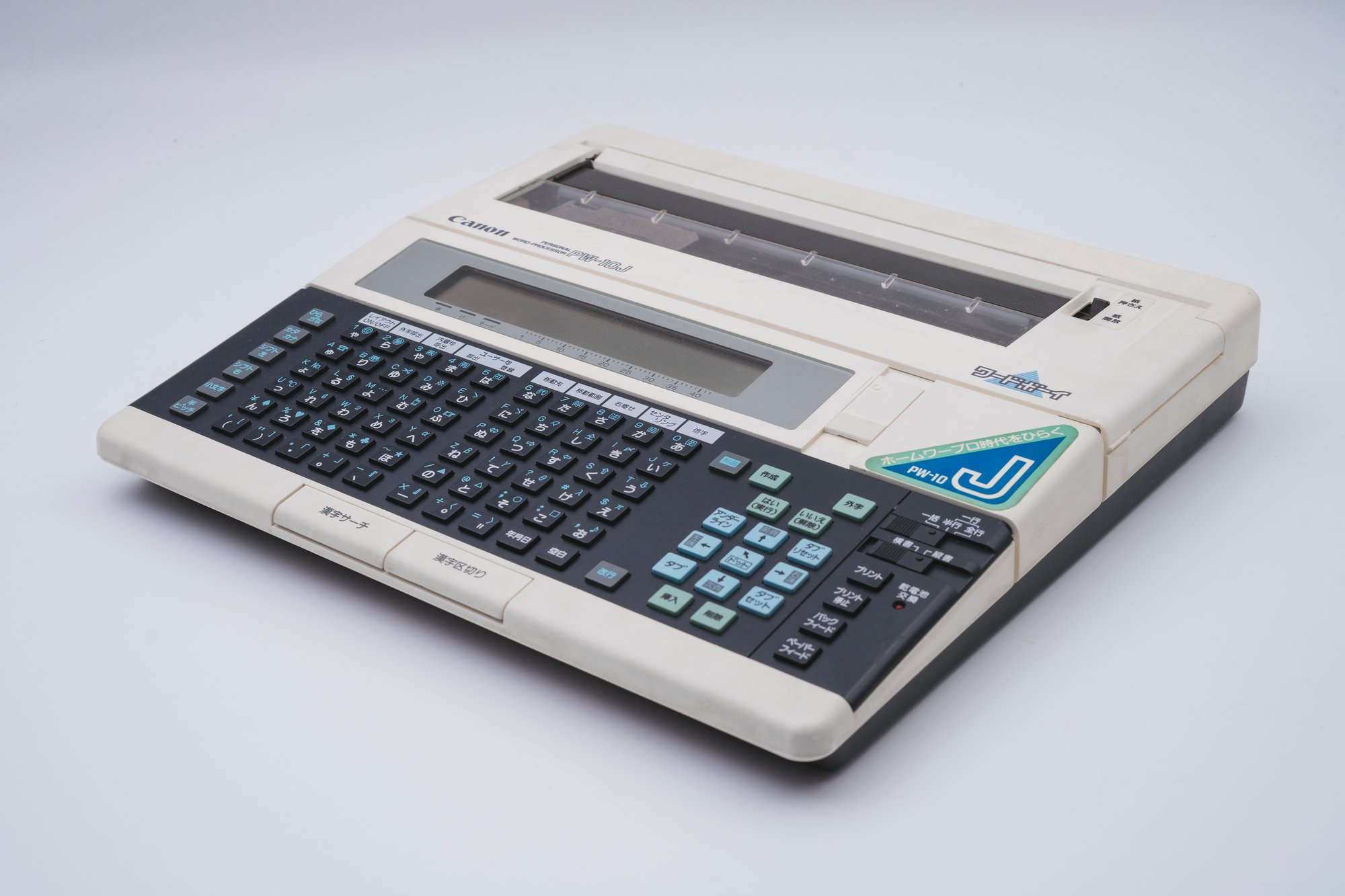
I believe this category of “kei word processors” didn’t really exist anywhere else. TRS-80 Model 100 and Z88 were ultraportable, but didn’t come with built-in printers. Wheelwriter and other “wedges” were a lot larger.
PW-10J is wedge-shaped, but feels portable and more like a “slate,” with everything you want inside – an okay keyboard, a small display, a dot-matrix printer.
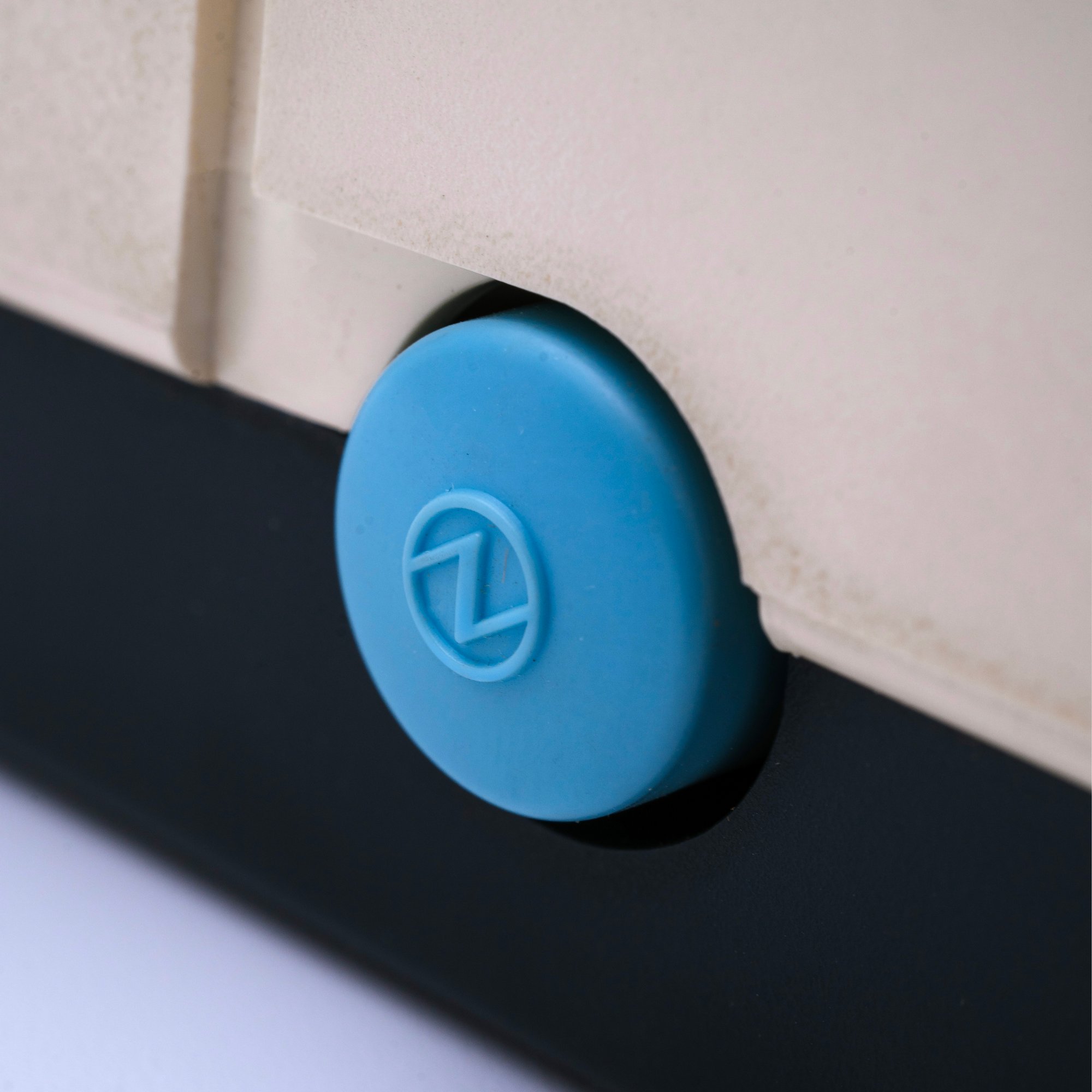
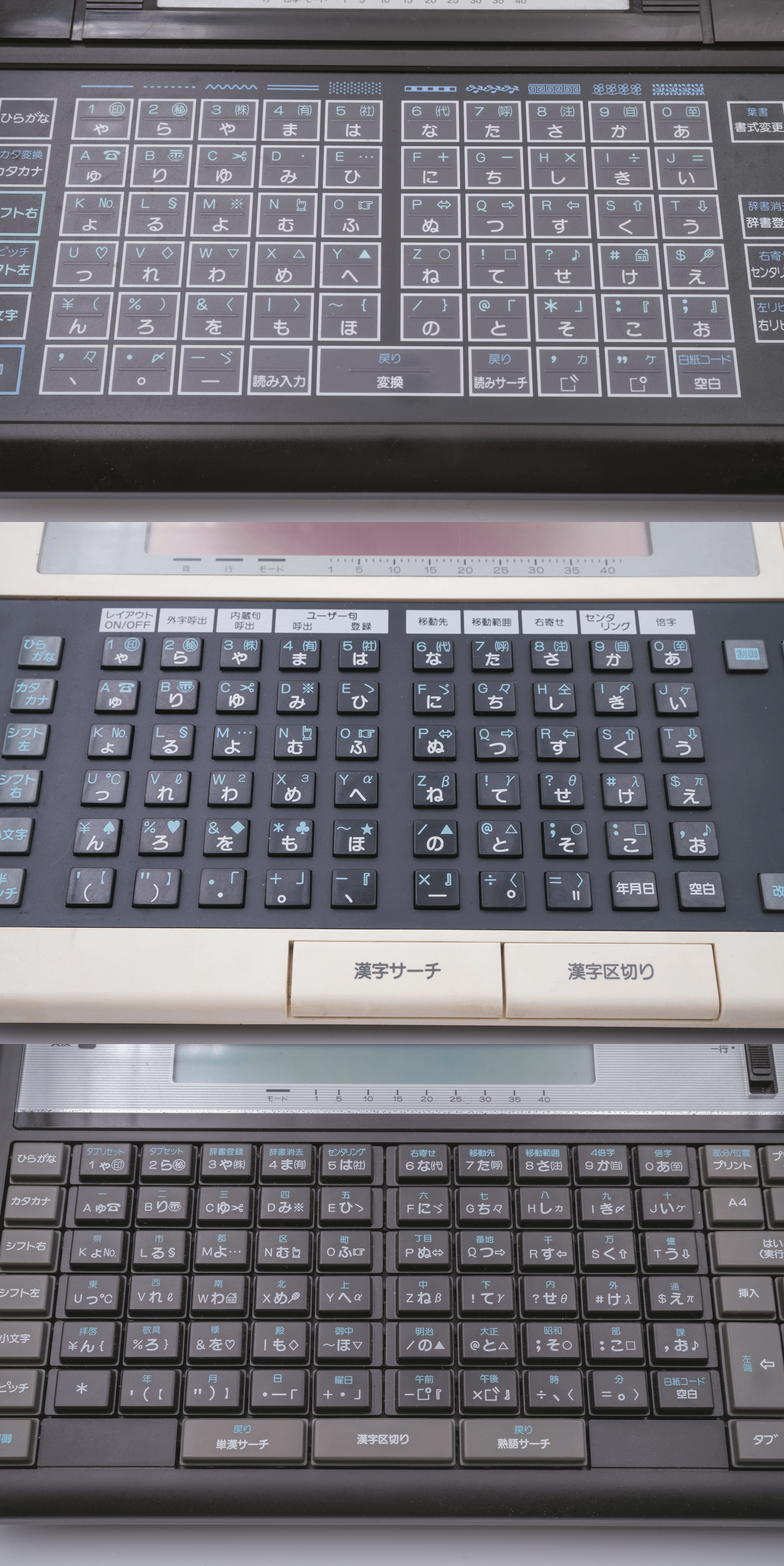
The key ordering is new still, compared to everything I listed last time. It’s a 5×6×2 matrix, and it humiliates the Latin letters with the A–Z ordering. (From the Western viewpoint, the combination of ortholinear and alphabetical is a particularly strange combination of progressive and perverse.)
⌘
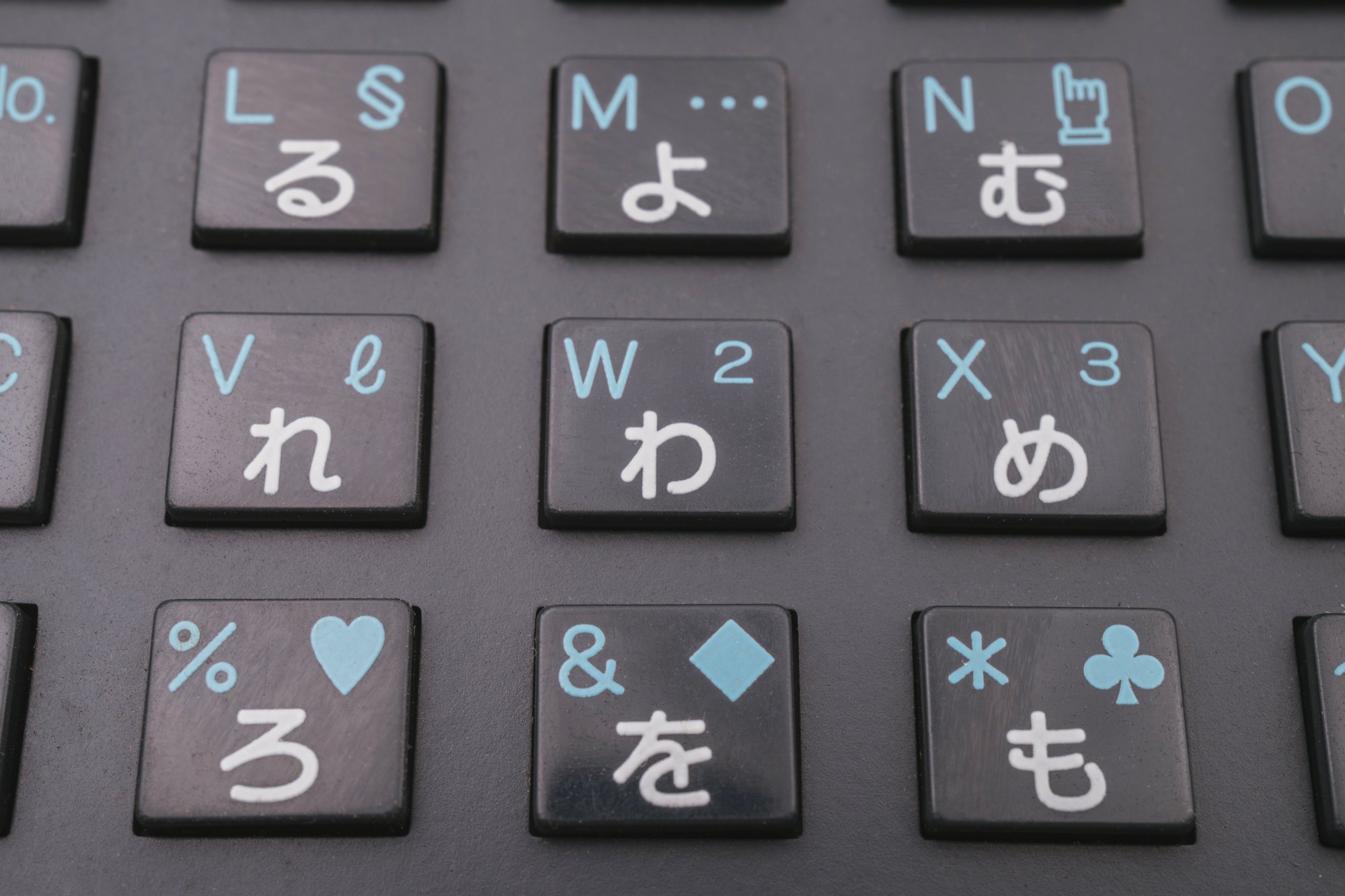
But I don’t just have a PW-10J. I also have a PW-15.

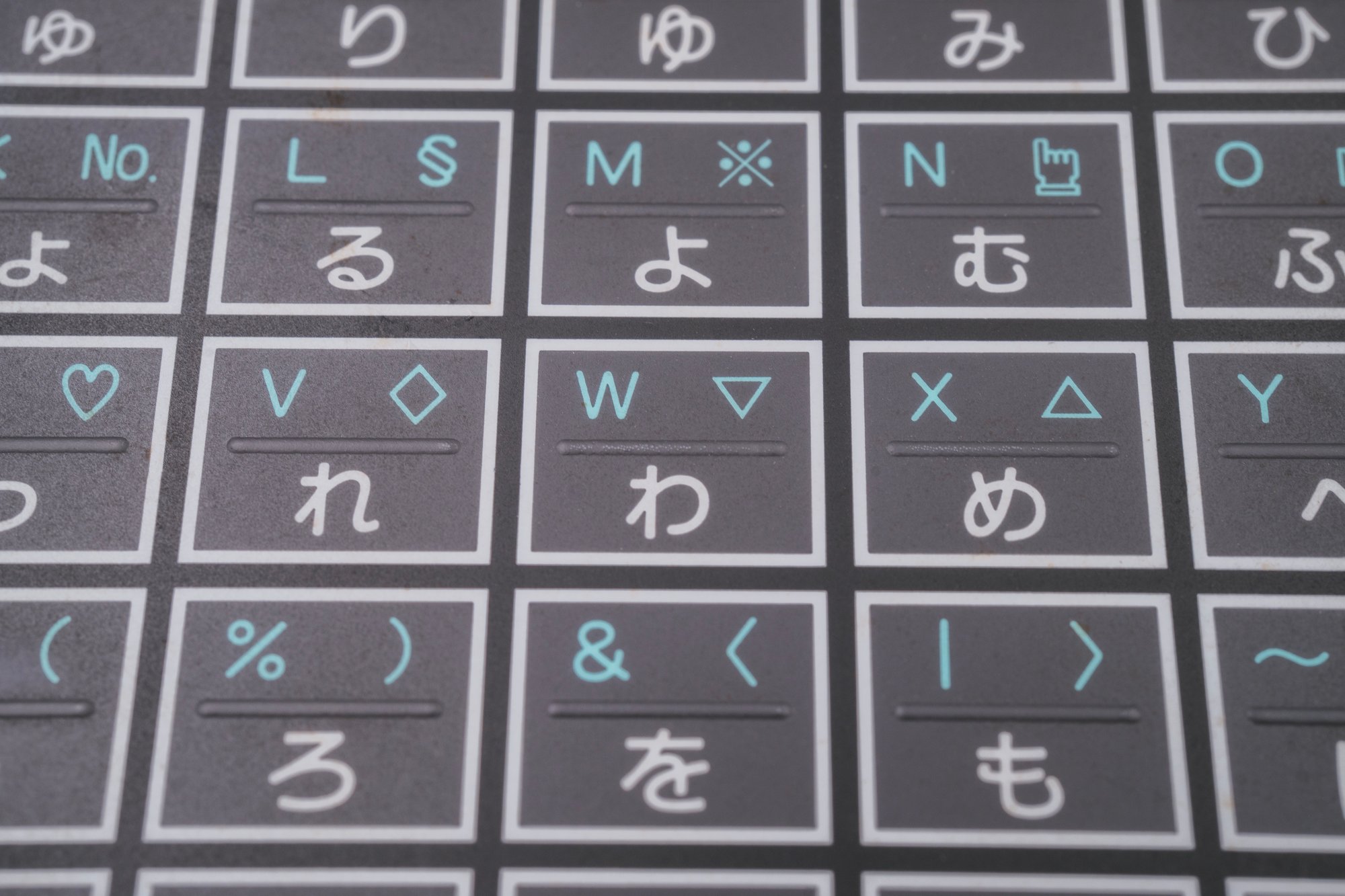
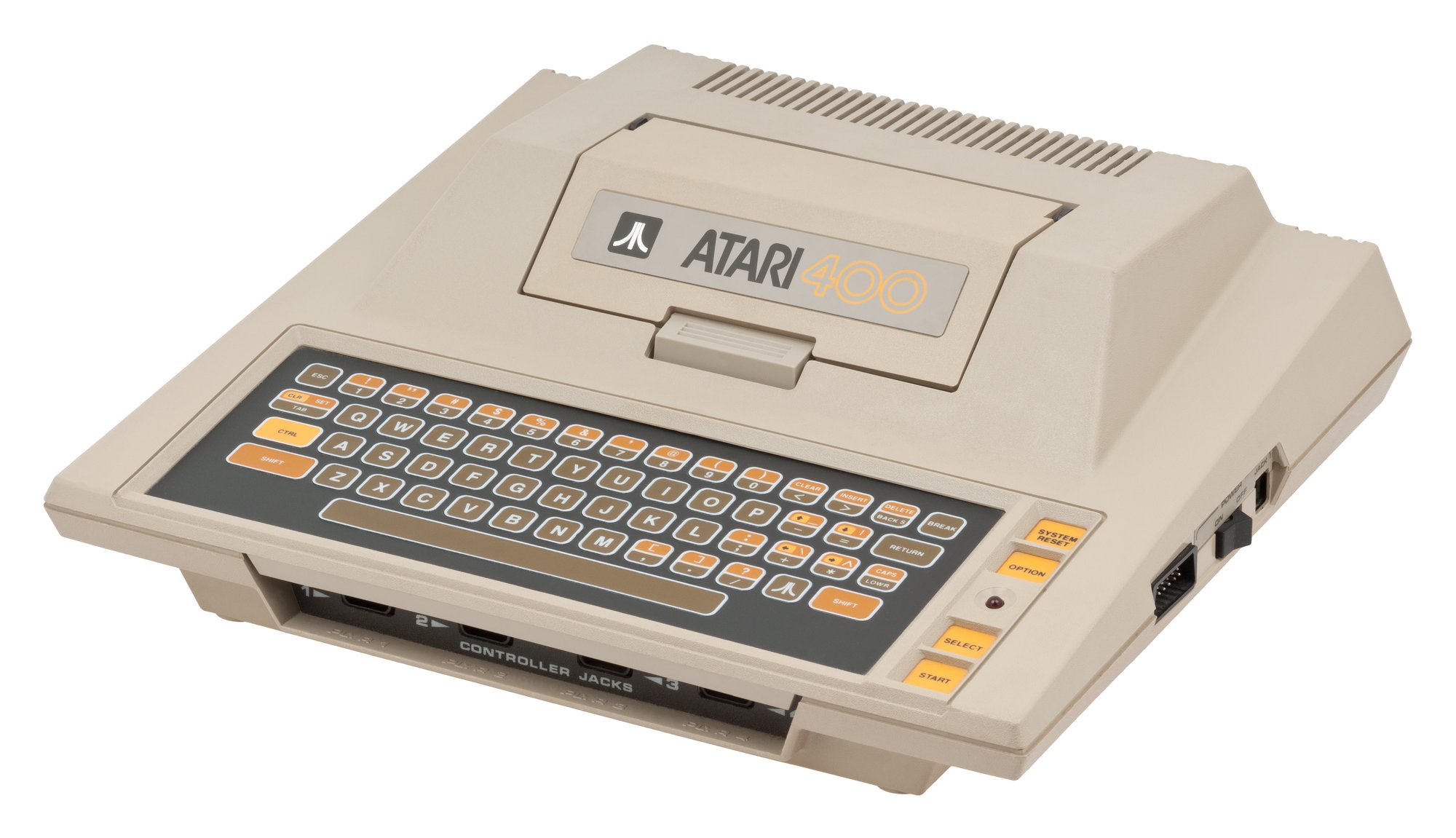
PW-10J’s keyboard is passable. PW-15 downgrades it, choosing a path similar to the derided Atari 400 and the curious Keyport 717: a membrane with zero tactile feedback.
To compensate for that, the designers tried two things. One I knew before from other computers: the border around the key is raised a bit. The other one – a ridge cutting through the key – feels novel. Both are meant to guide your fingers, although both are only marginally successful.
⌘
But I don’t just have a PW-10J and a PW-15. I also have a PW-30.
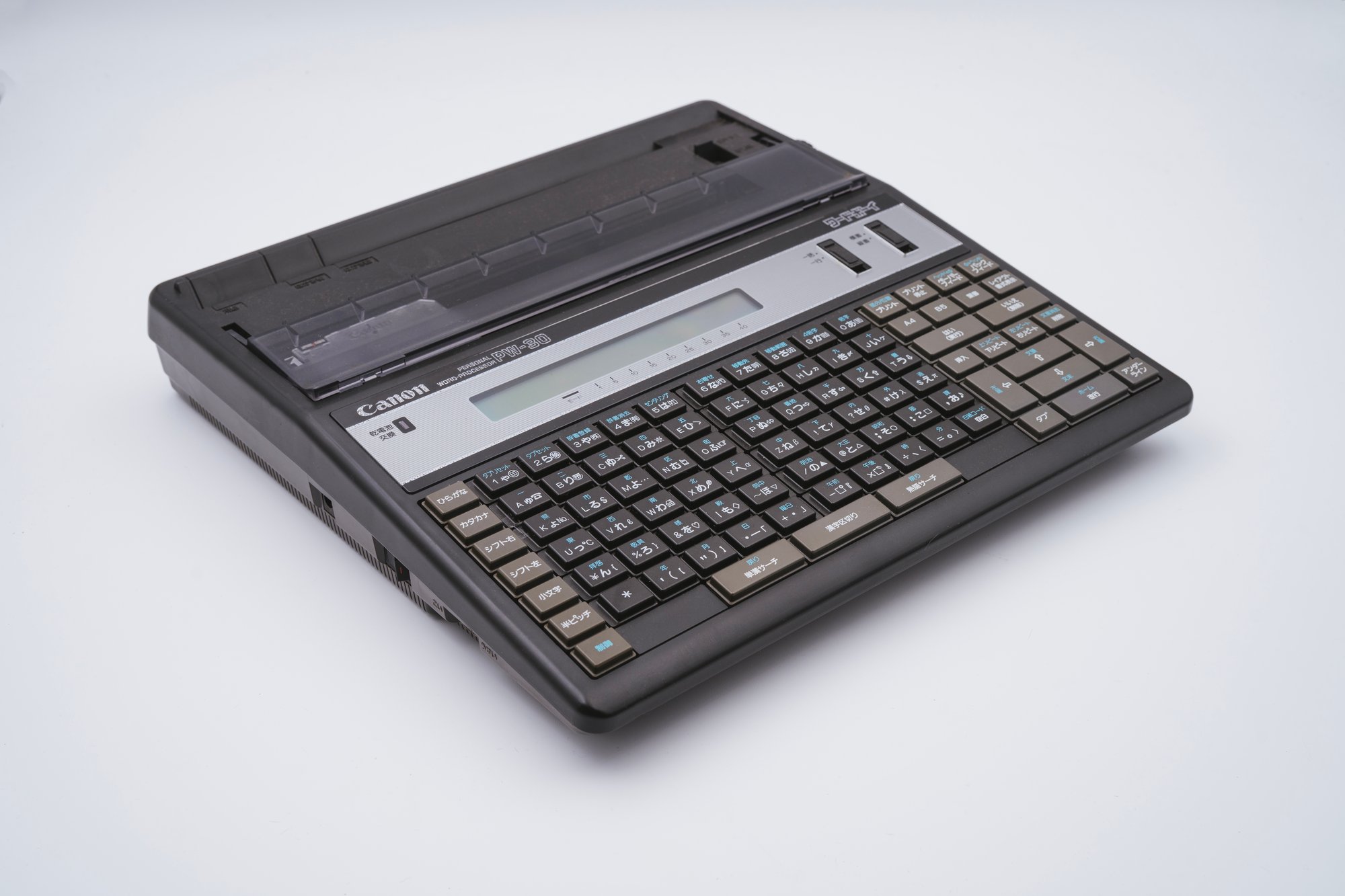
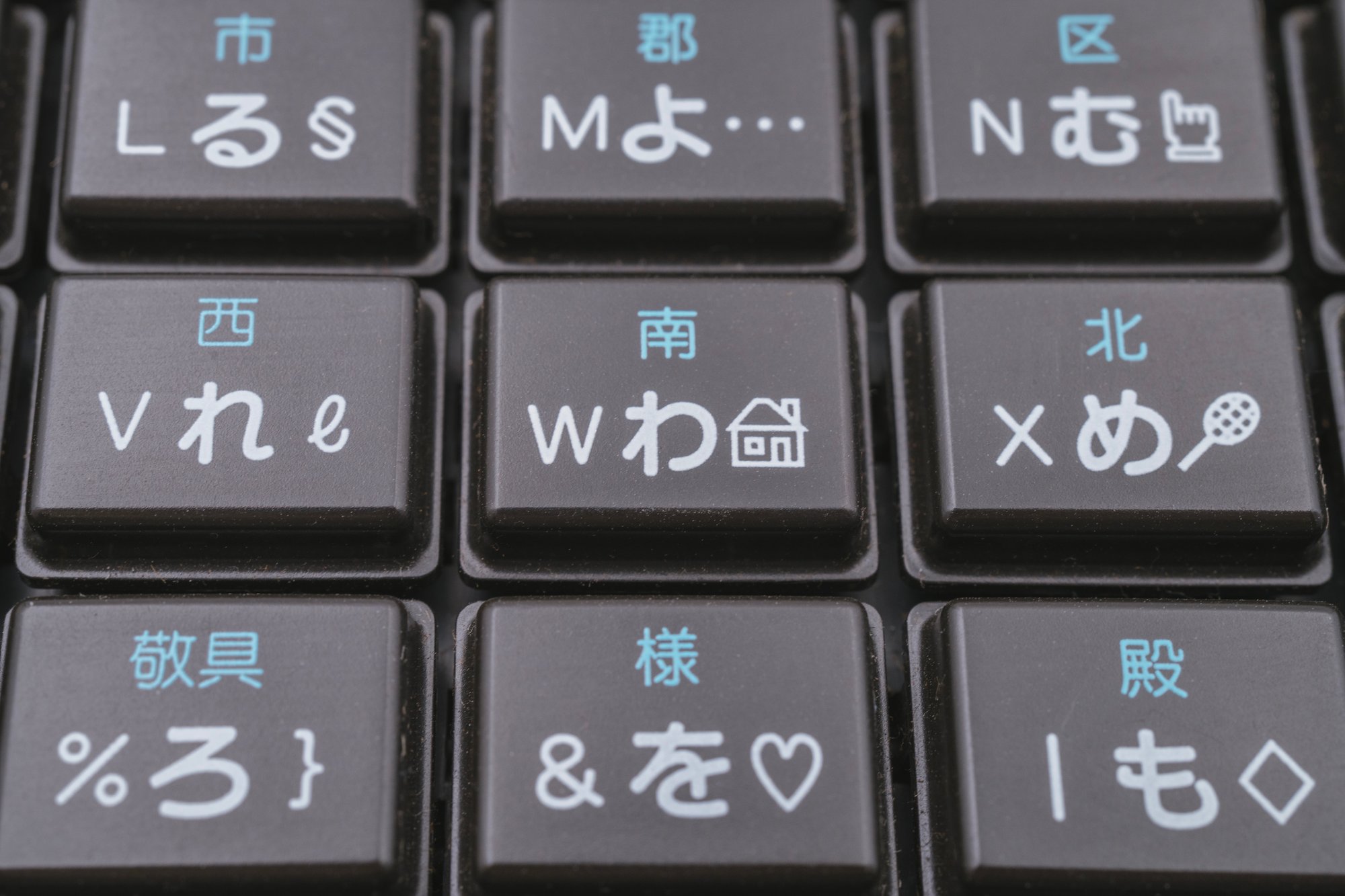
PW-30 feels more professional, with a keyboard that wouldn’t feel out of place on a modern laptop.
The palette is more buttoned down, the screen slightly bigger, and even the power switch more mundane. But it’s ultimately a very similar device.
⌘
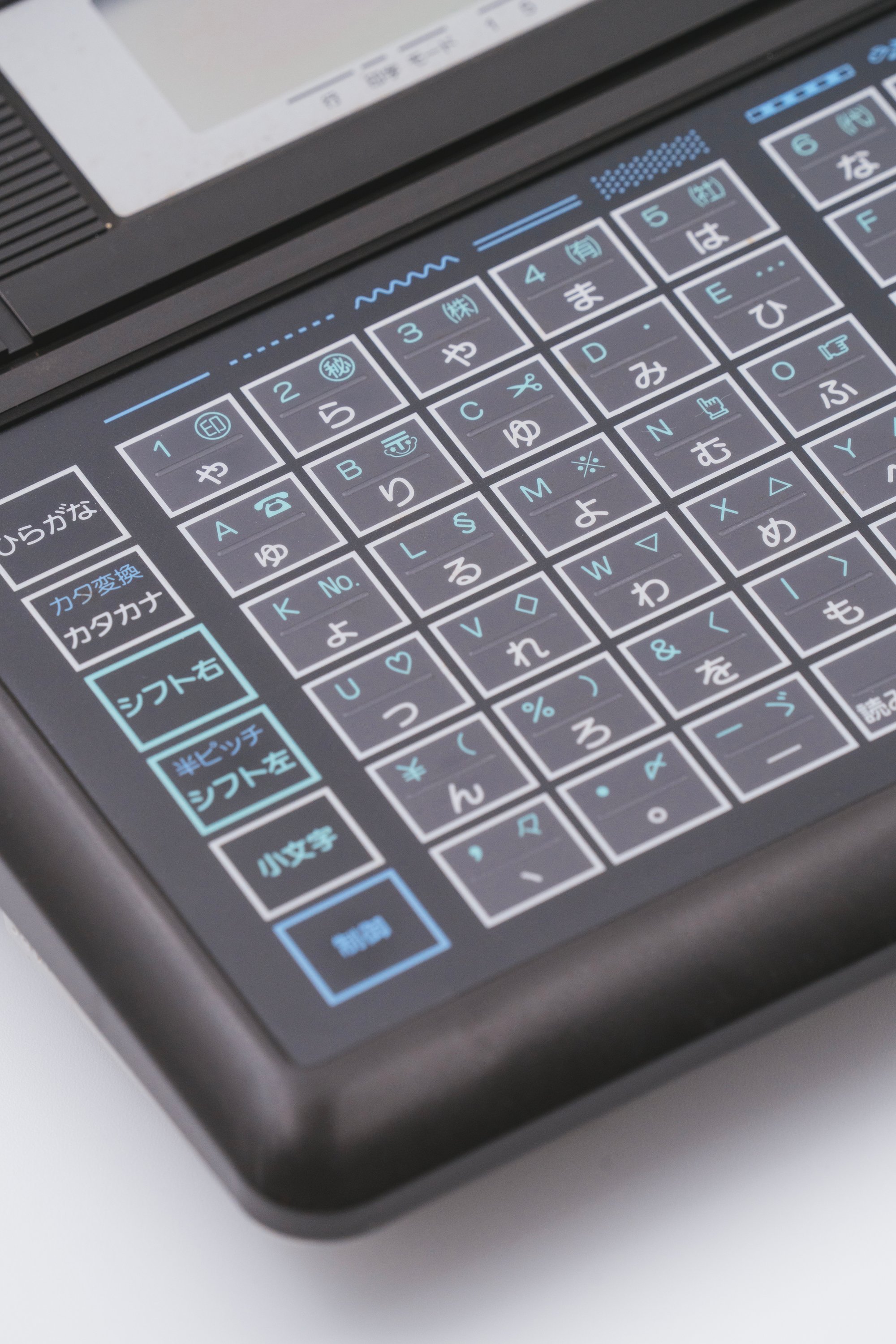
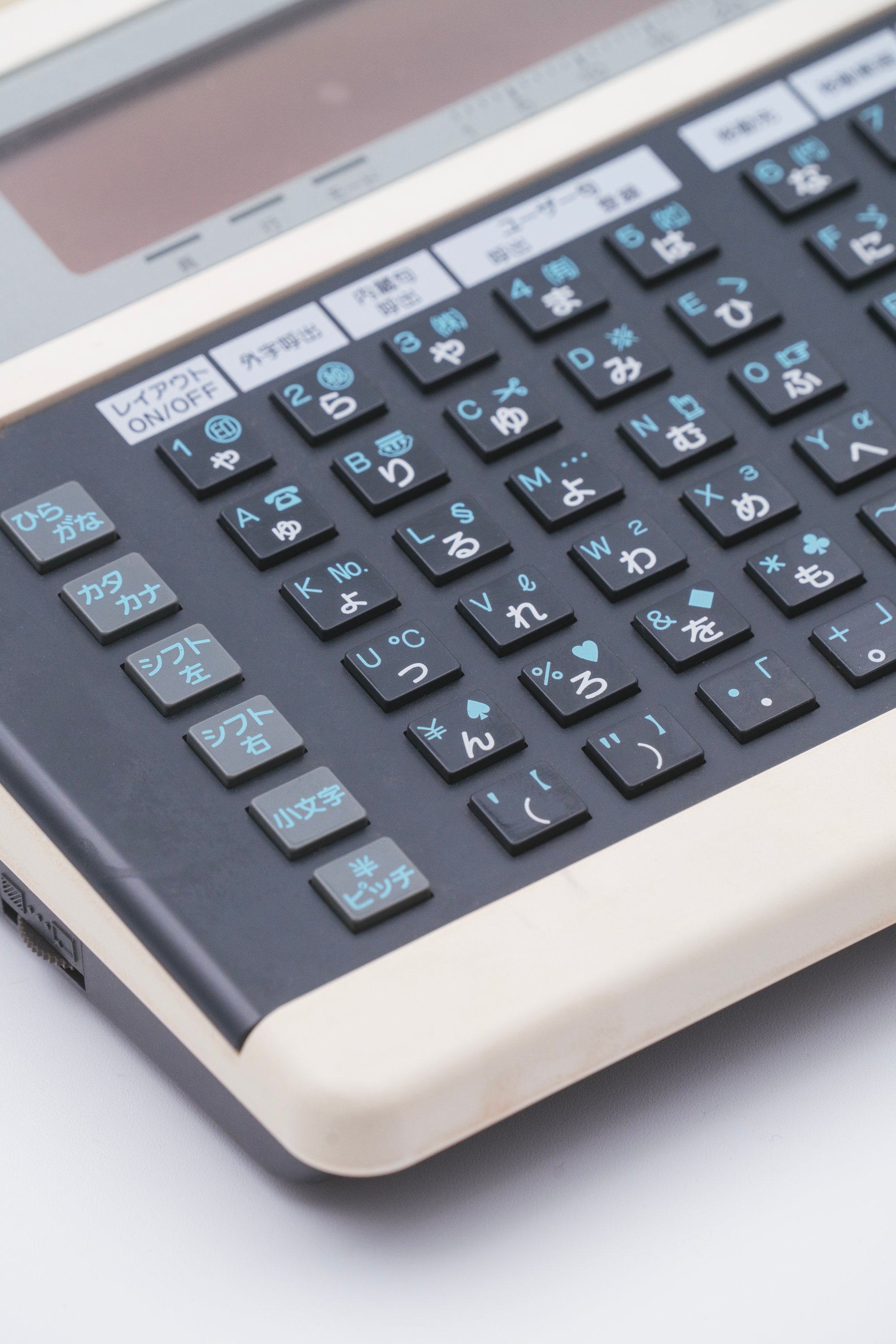
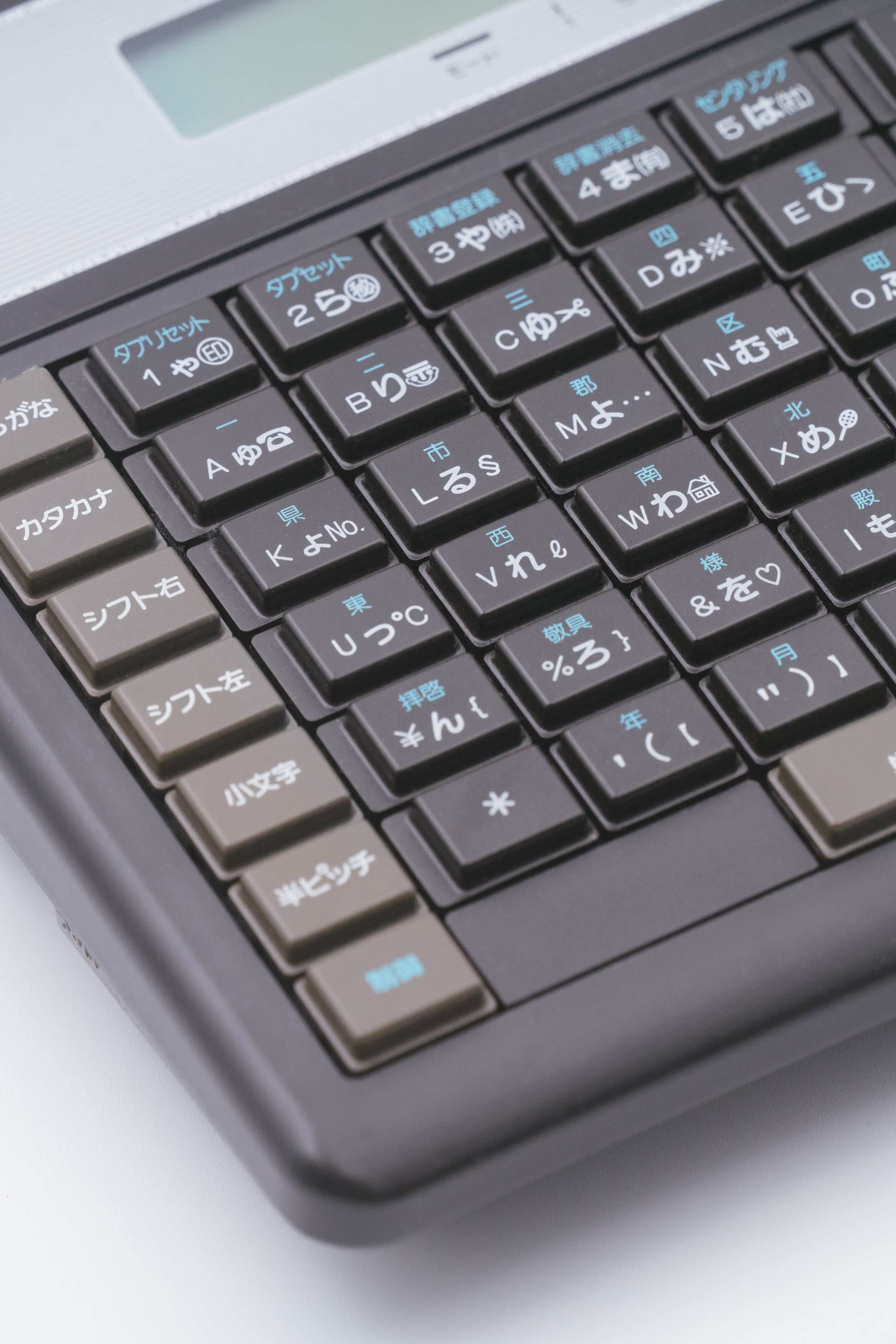
This is fascinating to me. Just above I was making fun of Atari 400, and the 400/800 duo was for years perhaps the best example of product stratification by keyboard. The 400’s keyboard feels like a toy; the 800’s is better than most competitors. There were other differences, too, chiefly in RAM and expandability, but never before could you utter “show me your keyboard and I’ll tell you who you are” with so much confidence.

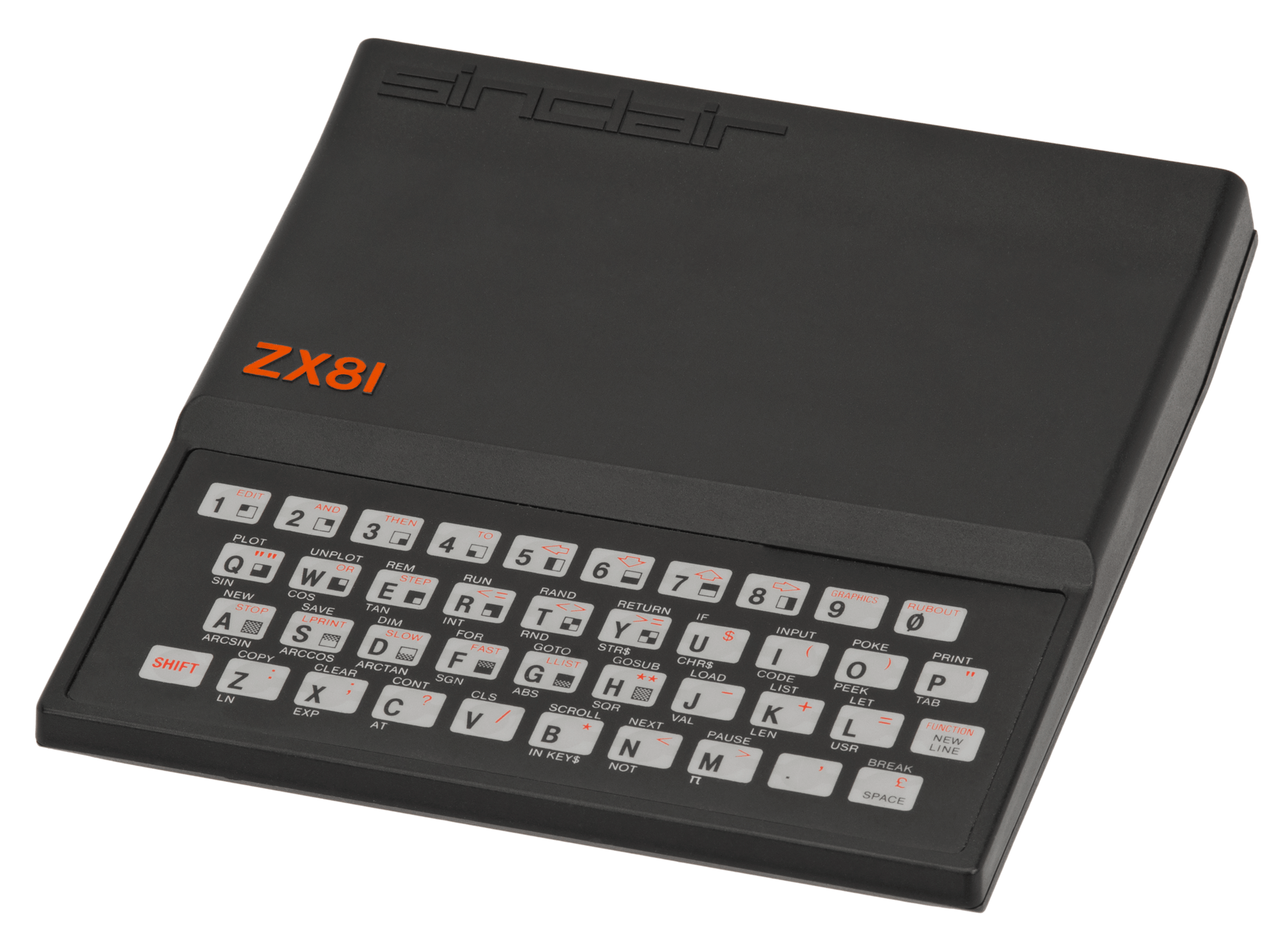
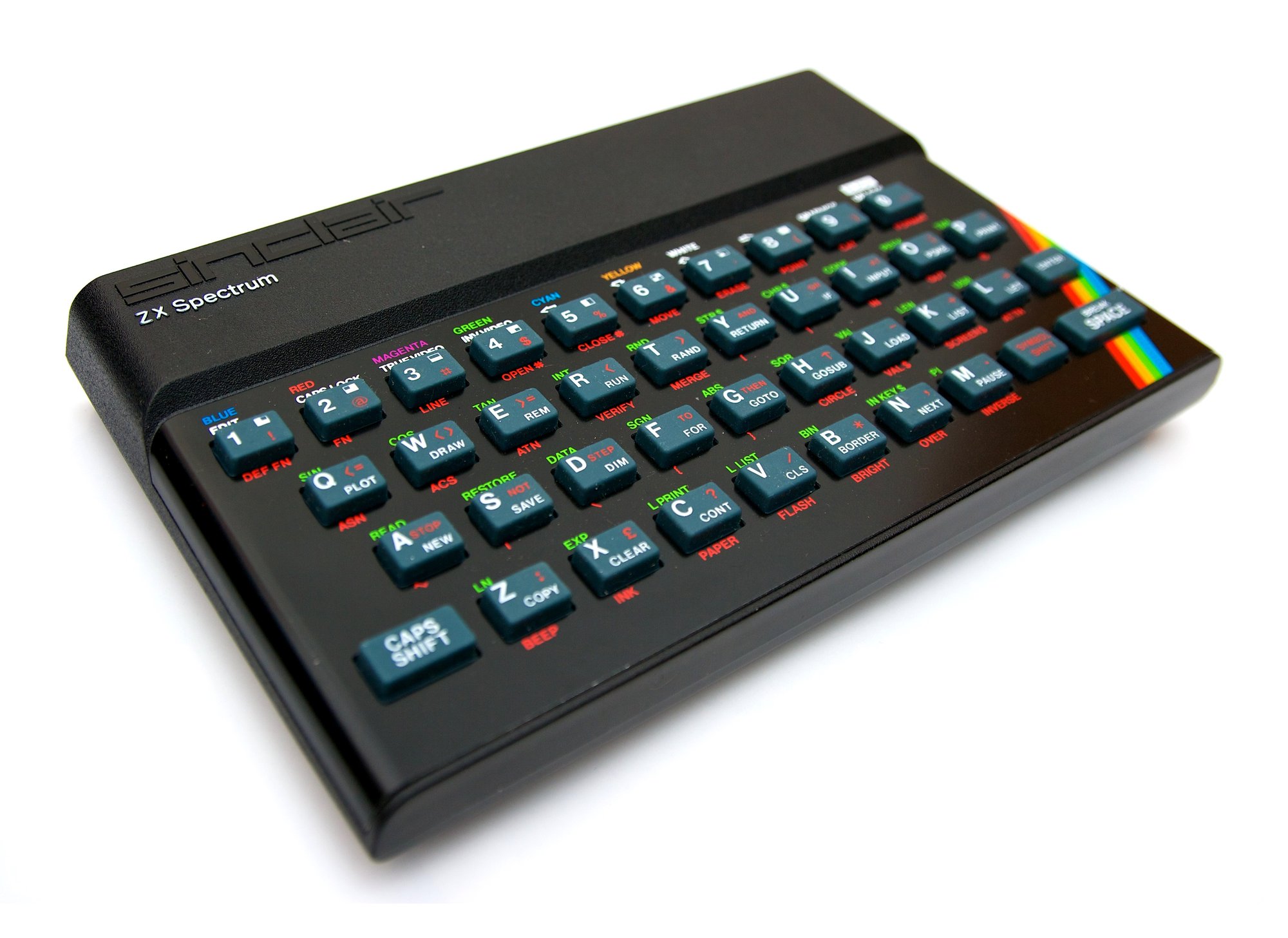
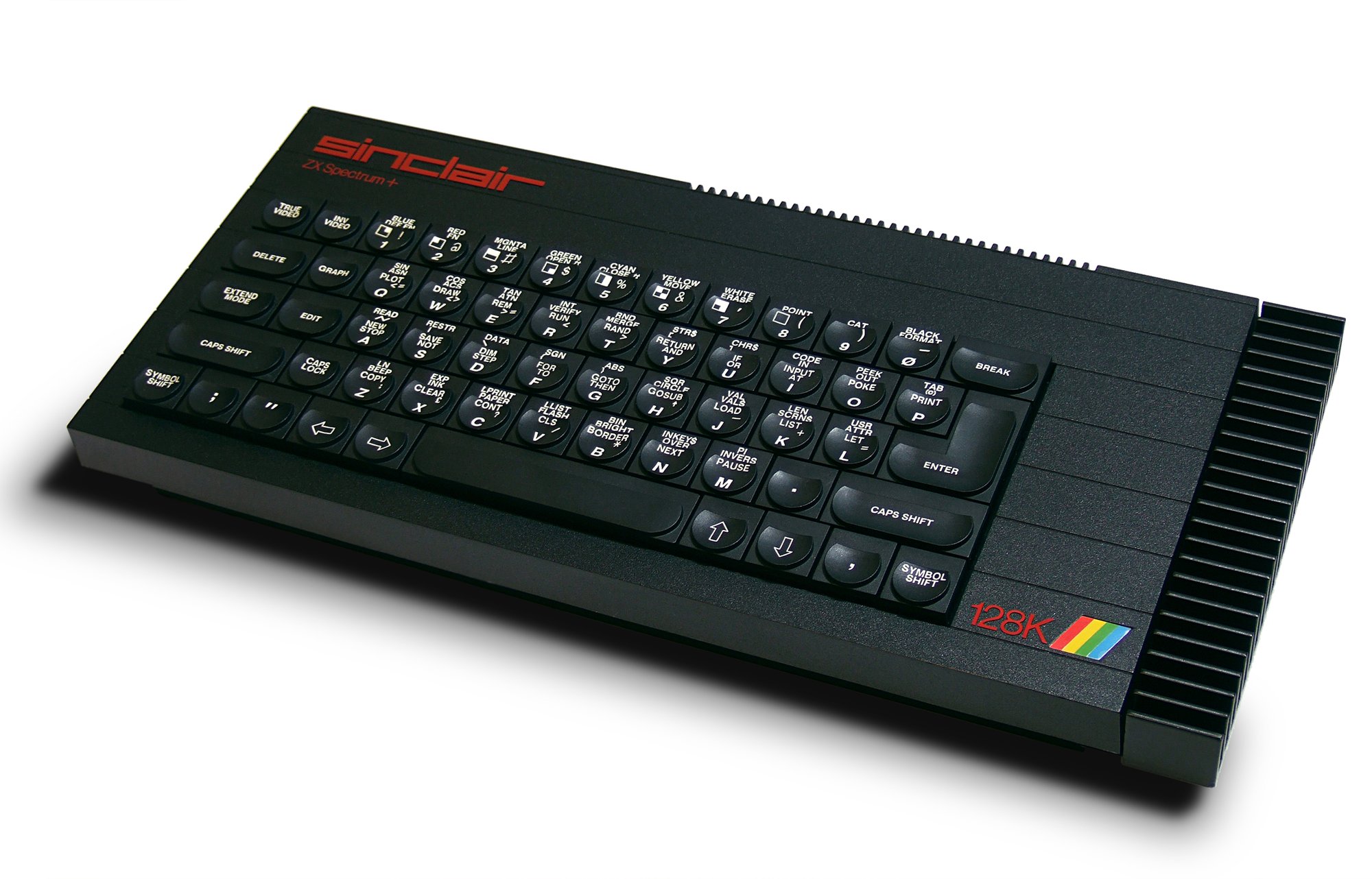
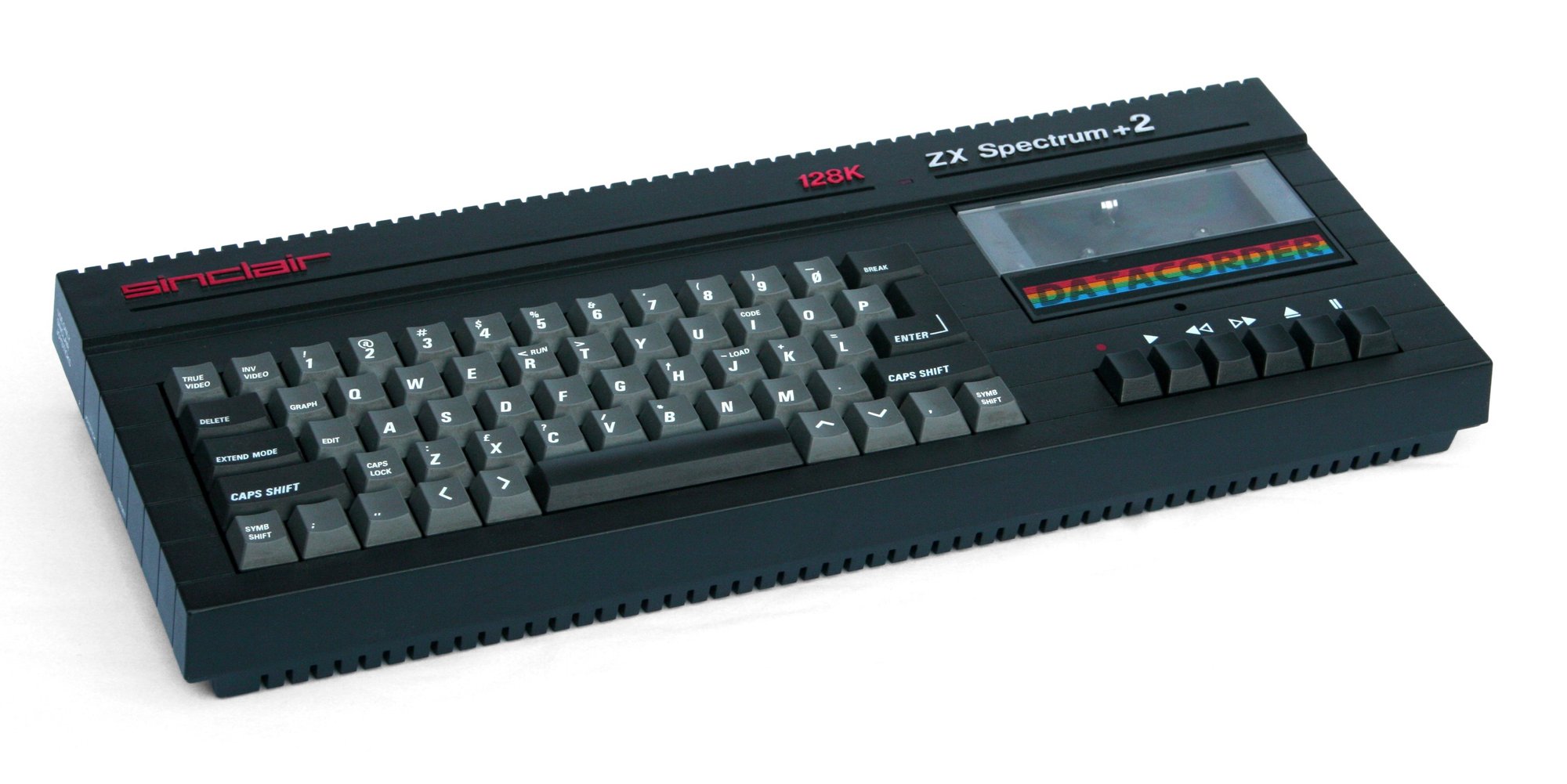
Just a few years later, Sinclair’s machines went on a similar journey – each subsequent model seemingly unlocked a new keyboard technology – although more spread out in time:
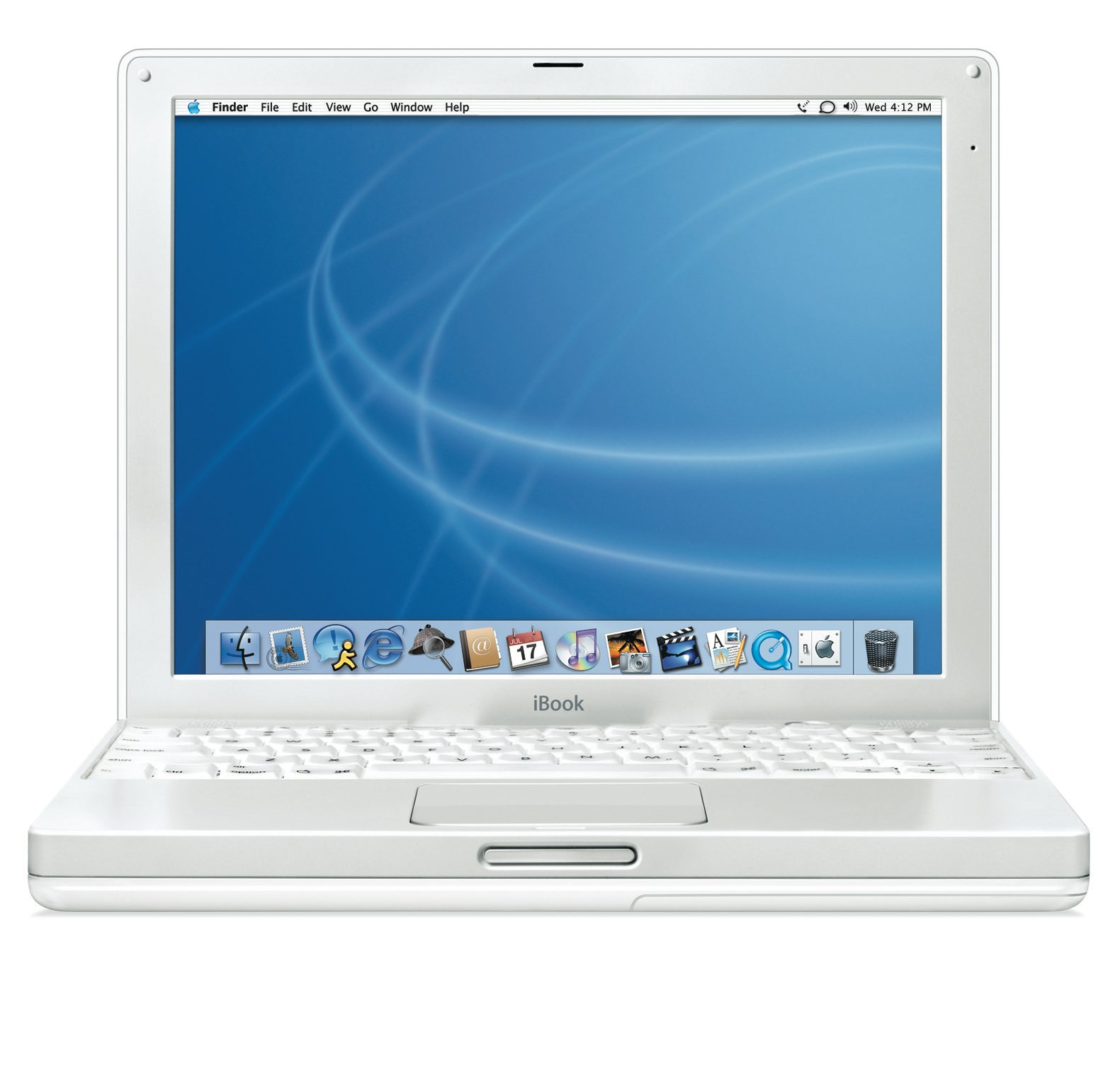
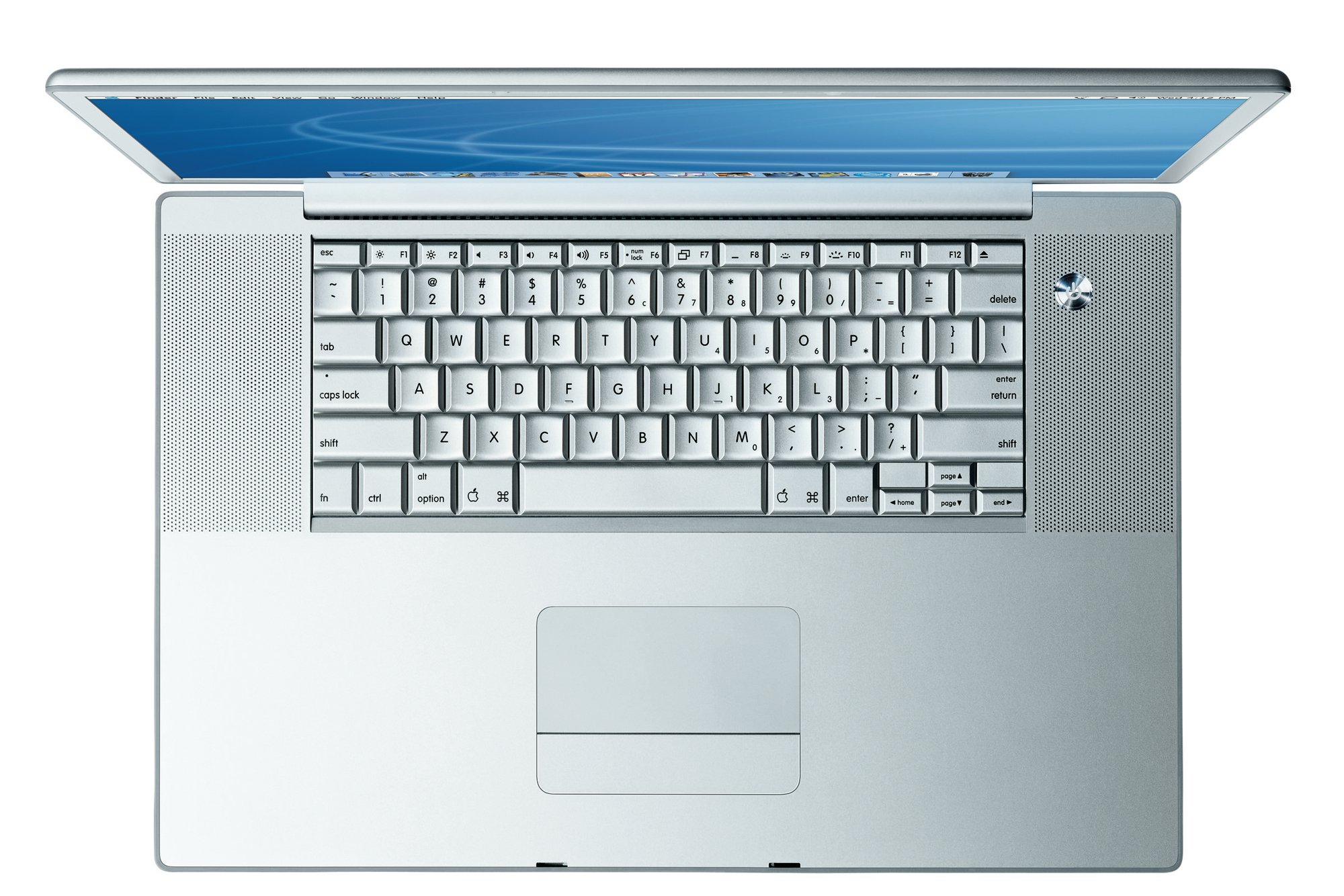
And even in the late 2000s, it felt like Apple’s laptops were harking back to these battles. Their newly metal PowerBooks had keyboards that too looked metallic, contrasting with the plastic attire of the cheaper iBooks, although at this moment in time it was mostly an aesthetic choice – all of Apple’s keyboards were quite good in daily use.
⌘
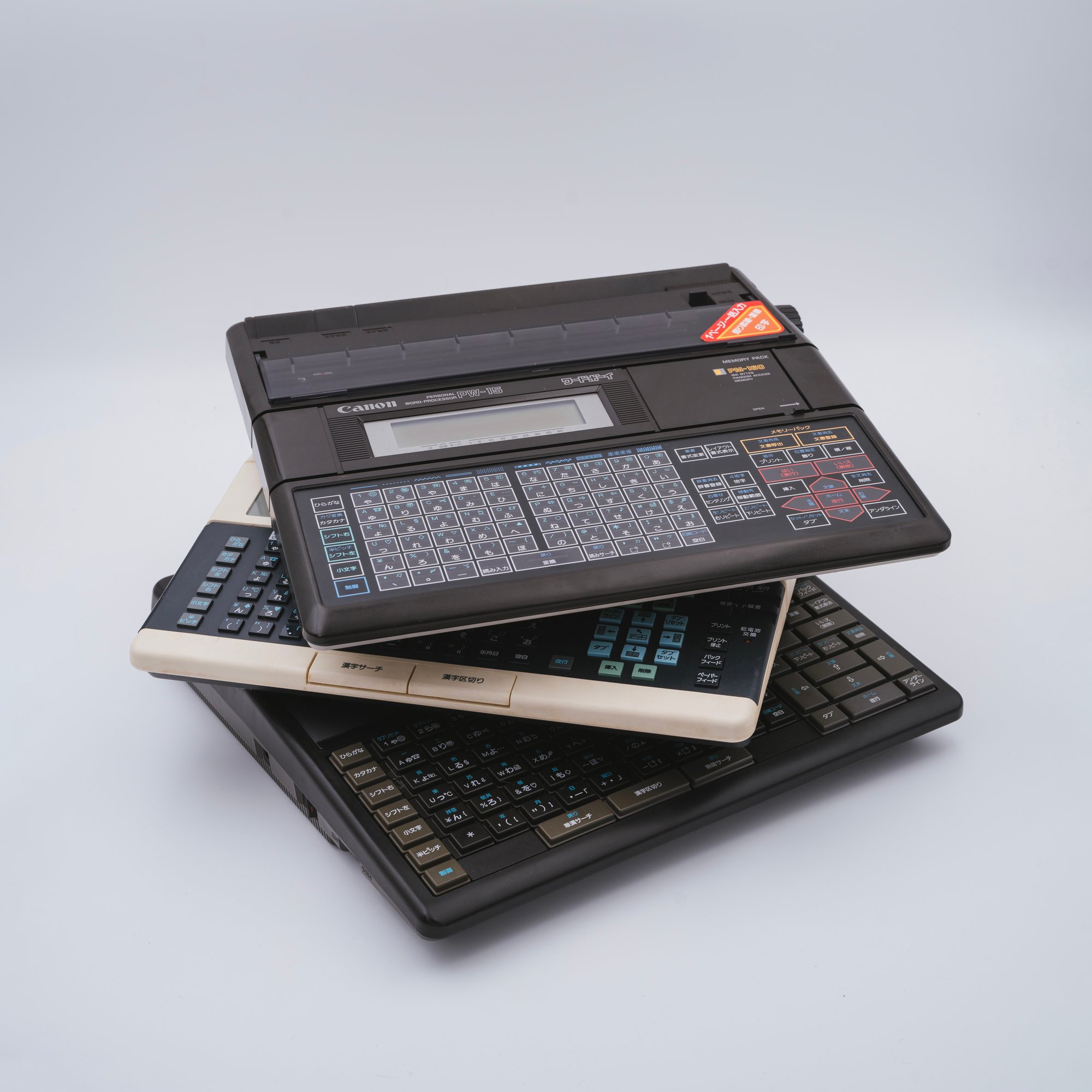
The three Canon PW word processors from the 1980s showed us can stratify with even more precision – none of these, after all, even approached the idea of mechanical keys.
I understand that they differ by more things than just the keyboards. I can see some signs from far away: memory packs slots in some models, a roller only present in a few, a delightful minimap wherever there’s a larger screen.


But I can only piece fragments of this story together. This time there were no brochures to scan, and information online is scant or perhaps I don’t know how to find it. I can’t even really use these machines without manuals, as even the key labels itself appear through the porous, frustrating layer of live-view Google Translate.
Also, three word processors? Oh, there were more than three.
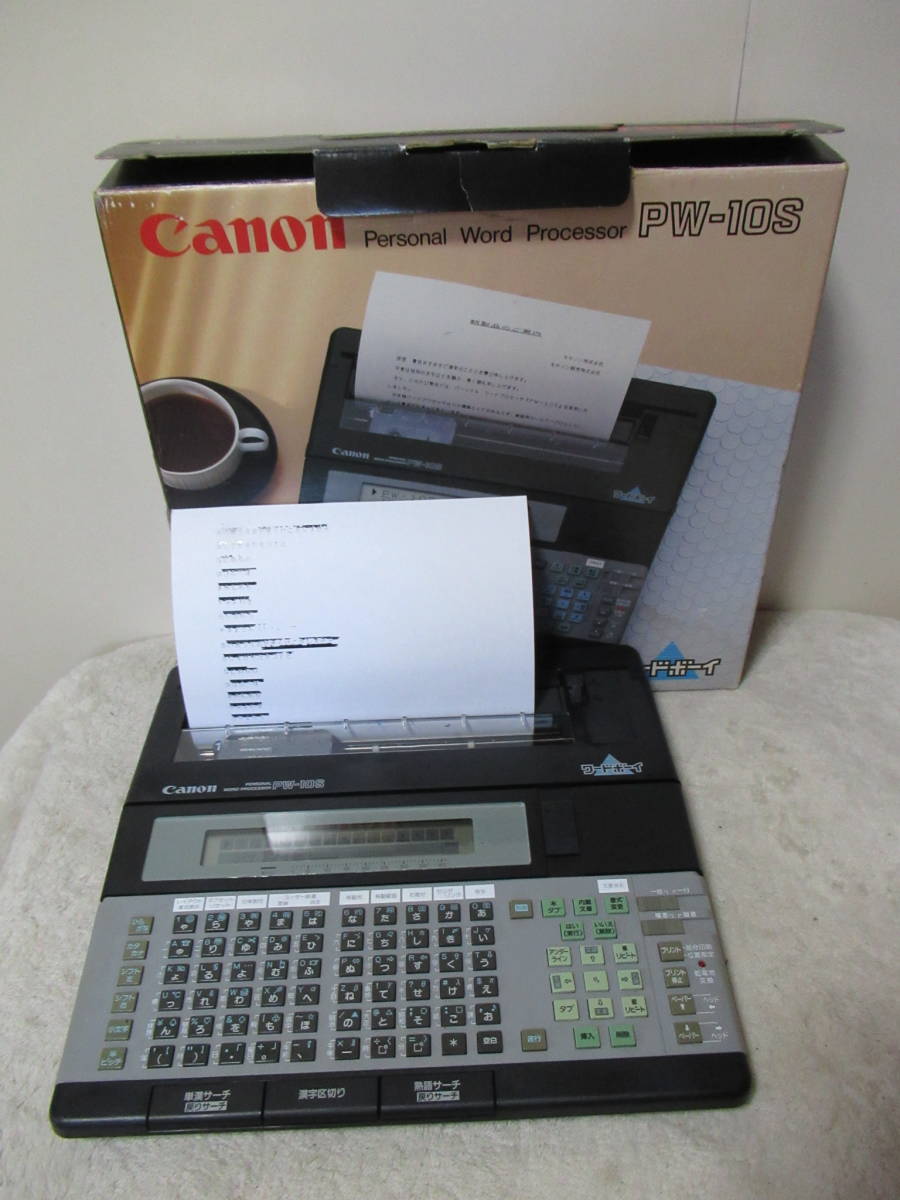
PW-10J had different flavours, PW-10E and PW-10S, the latter coming with an actually nice, cold colour palette.
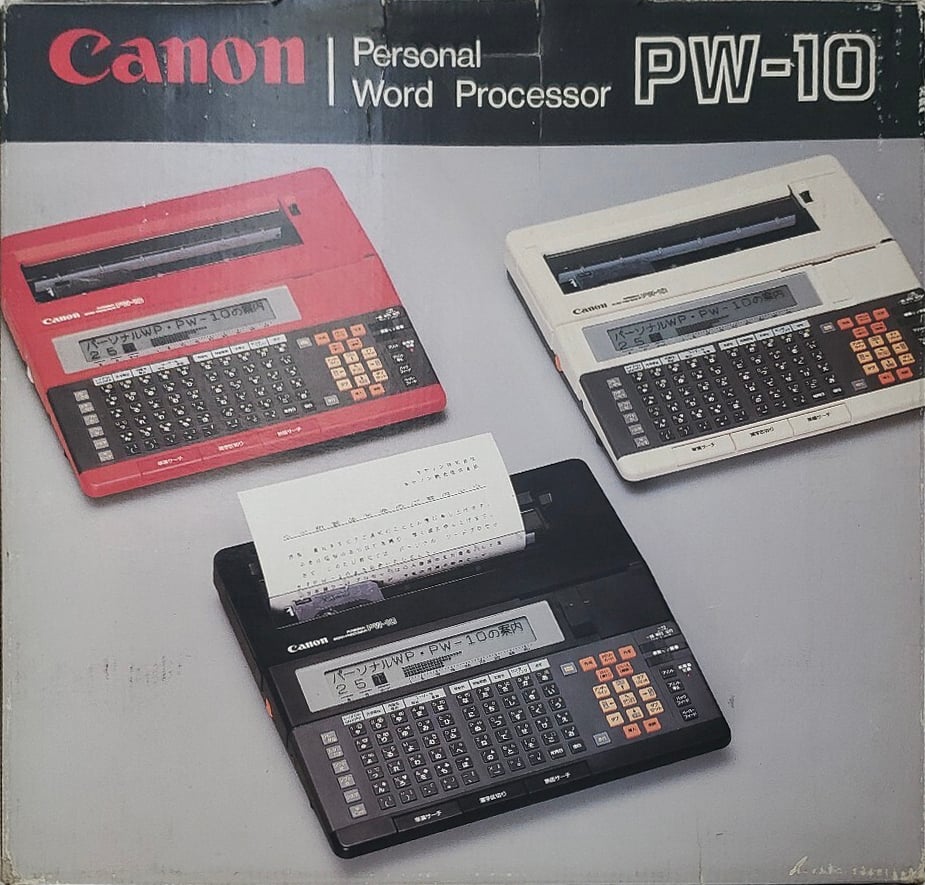
And PW-10 without a letter – yet another flavour! – came in a handsome red.
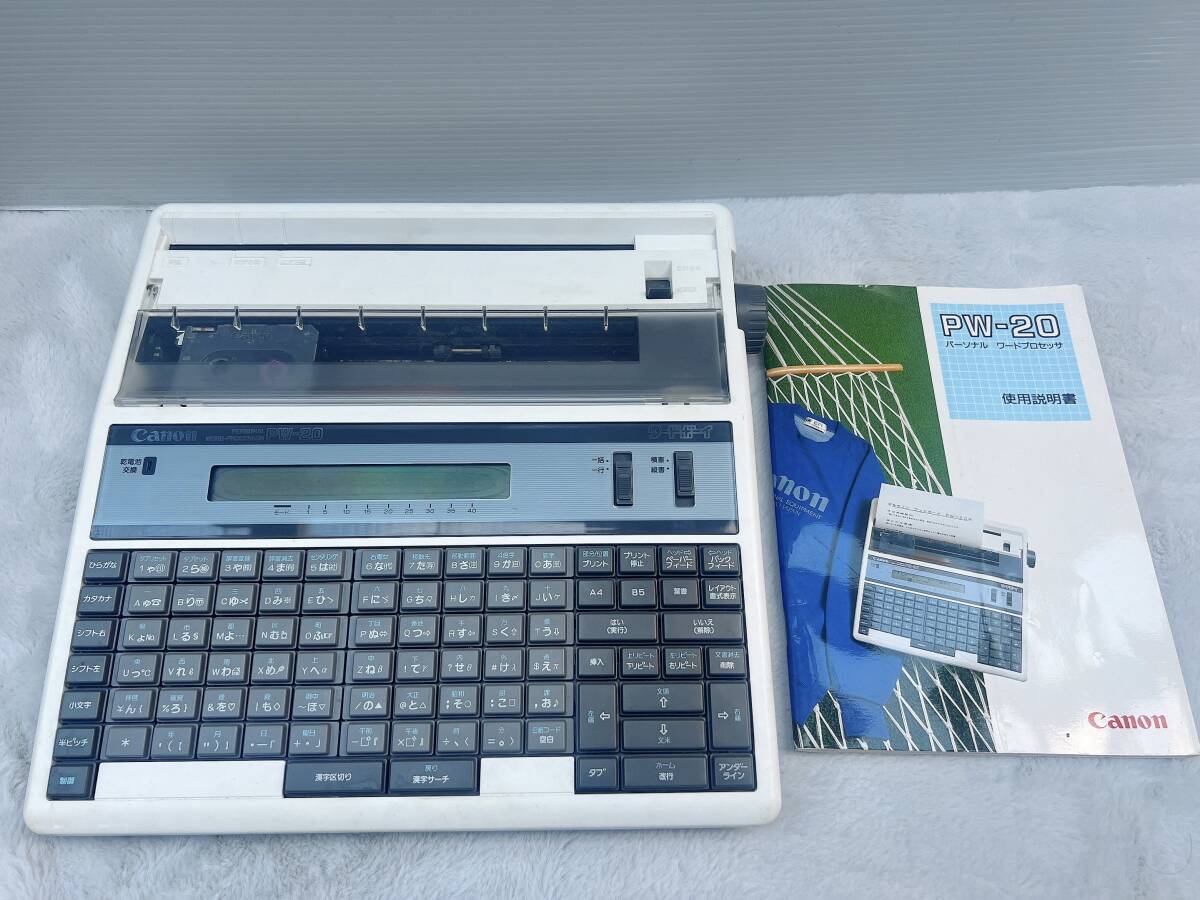
Somewhere in between PW-10 and PW-30 there was also a PW-20, with the more mature keyboard and yet slightly fewer keys.
If PW-20 and PW-30 bothered you by not filling out the entire bottom row, don’t worry. Here’s PW-50 with a fresh delivery of even more keys.
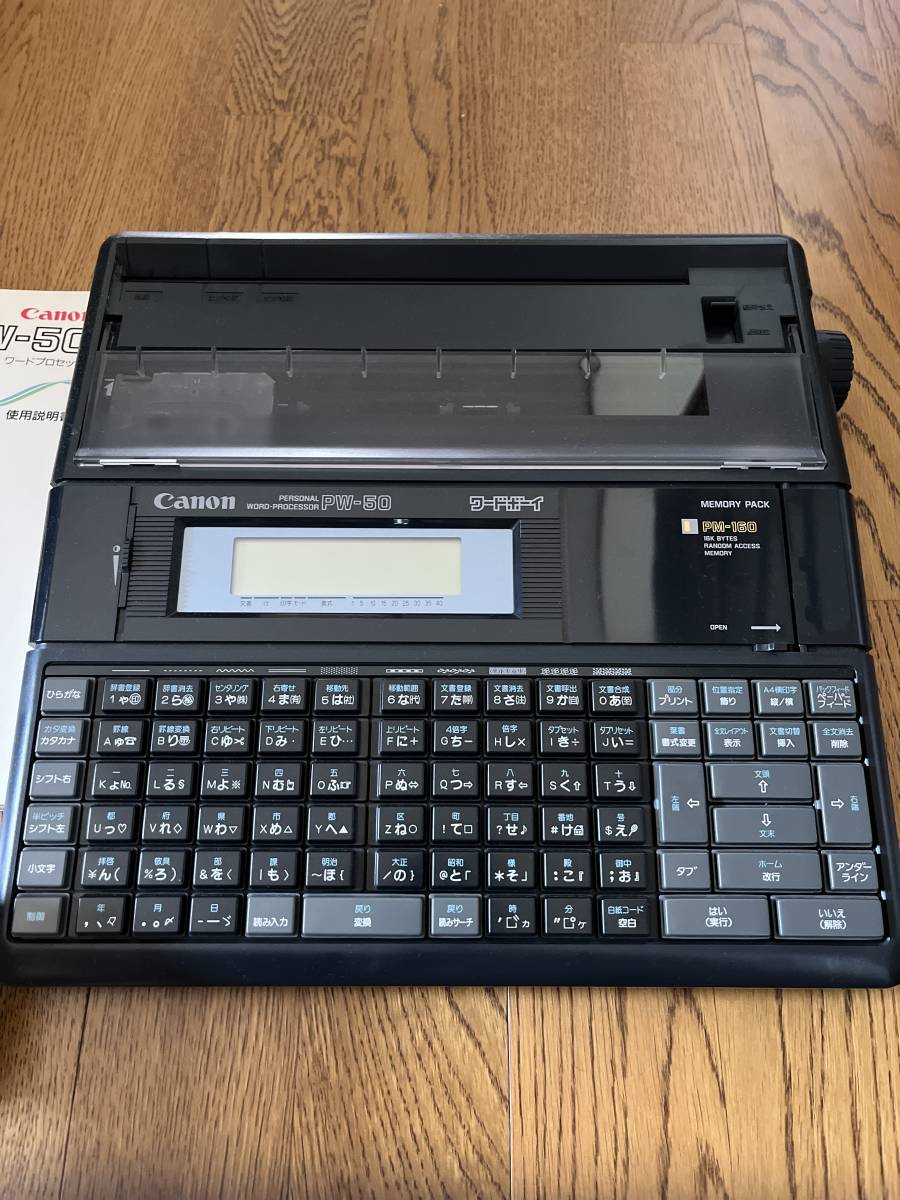
On a lark, I kept incrementing the numbers in Google and Buyee, and the word processors kept arriving. PW-60 answers the question that was on our minds all along: was there one with actual proper mechanical keys? Yes, there was:

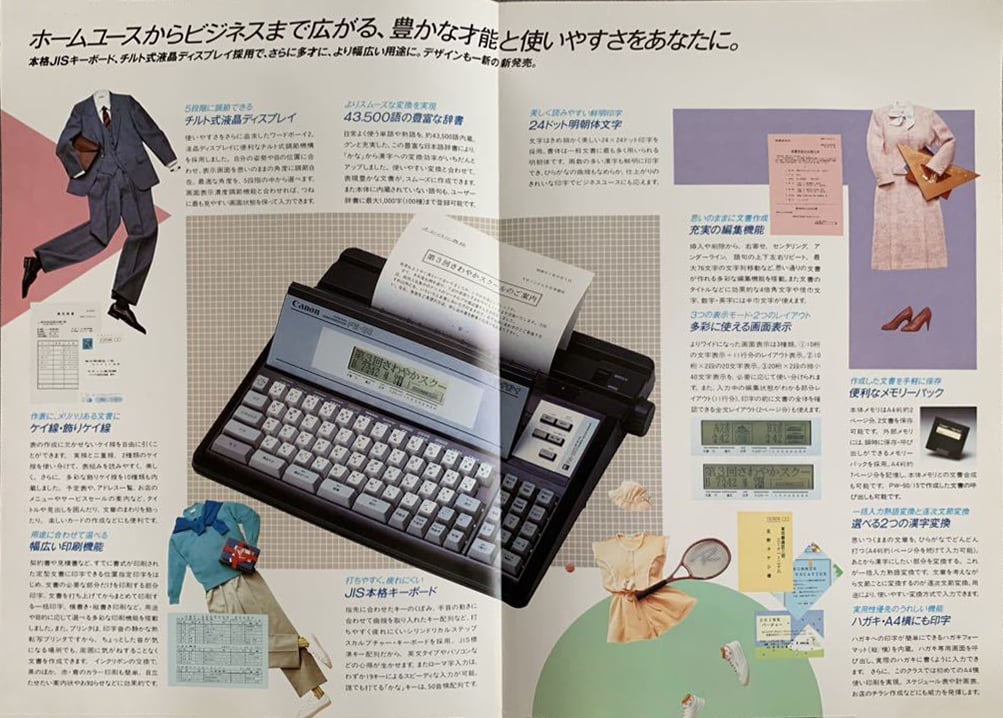
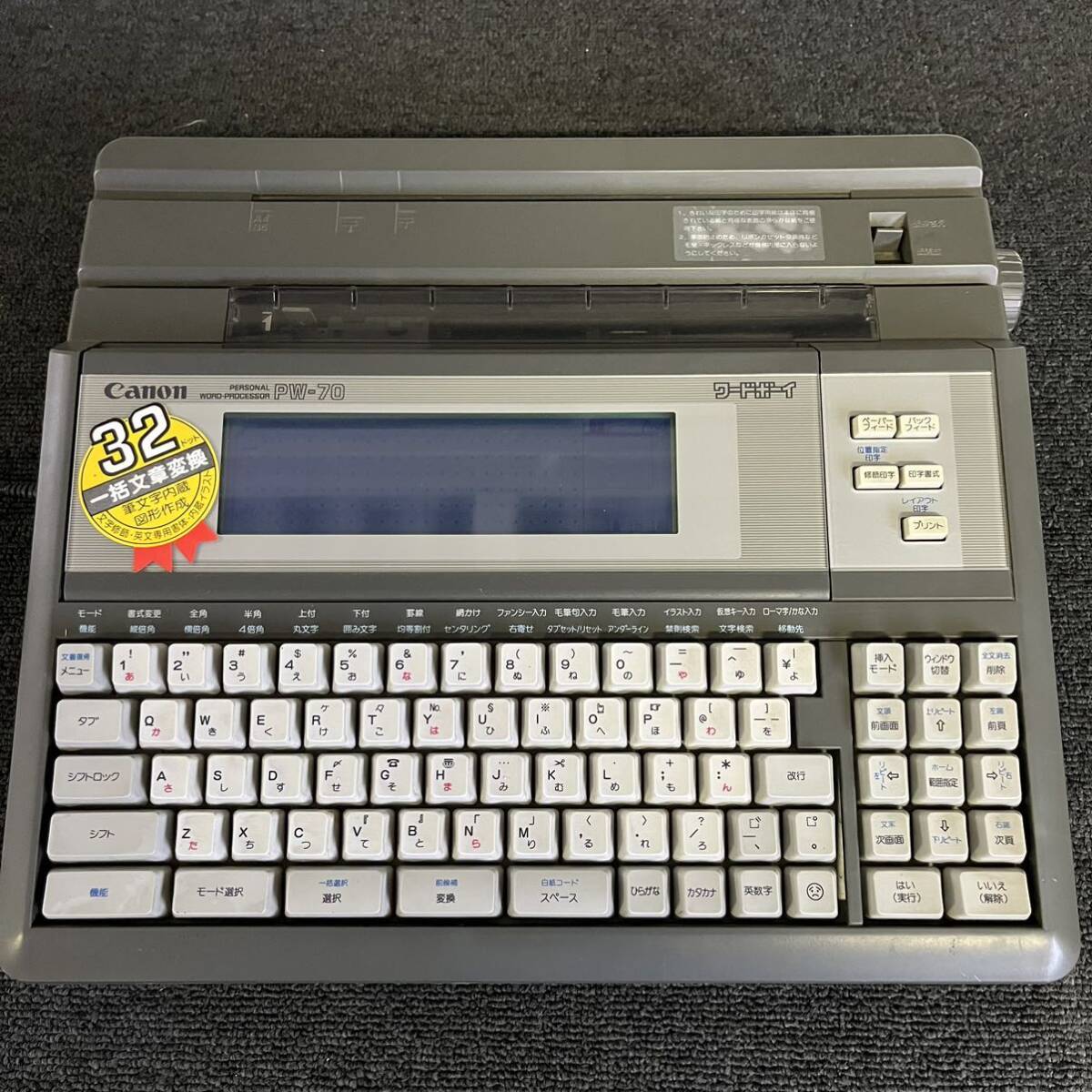
There were also PW-70, PW-80, and even PW-95:
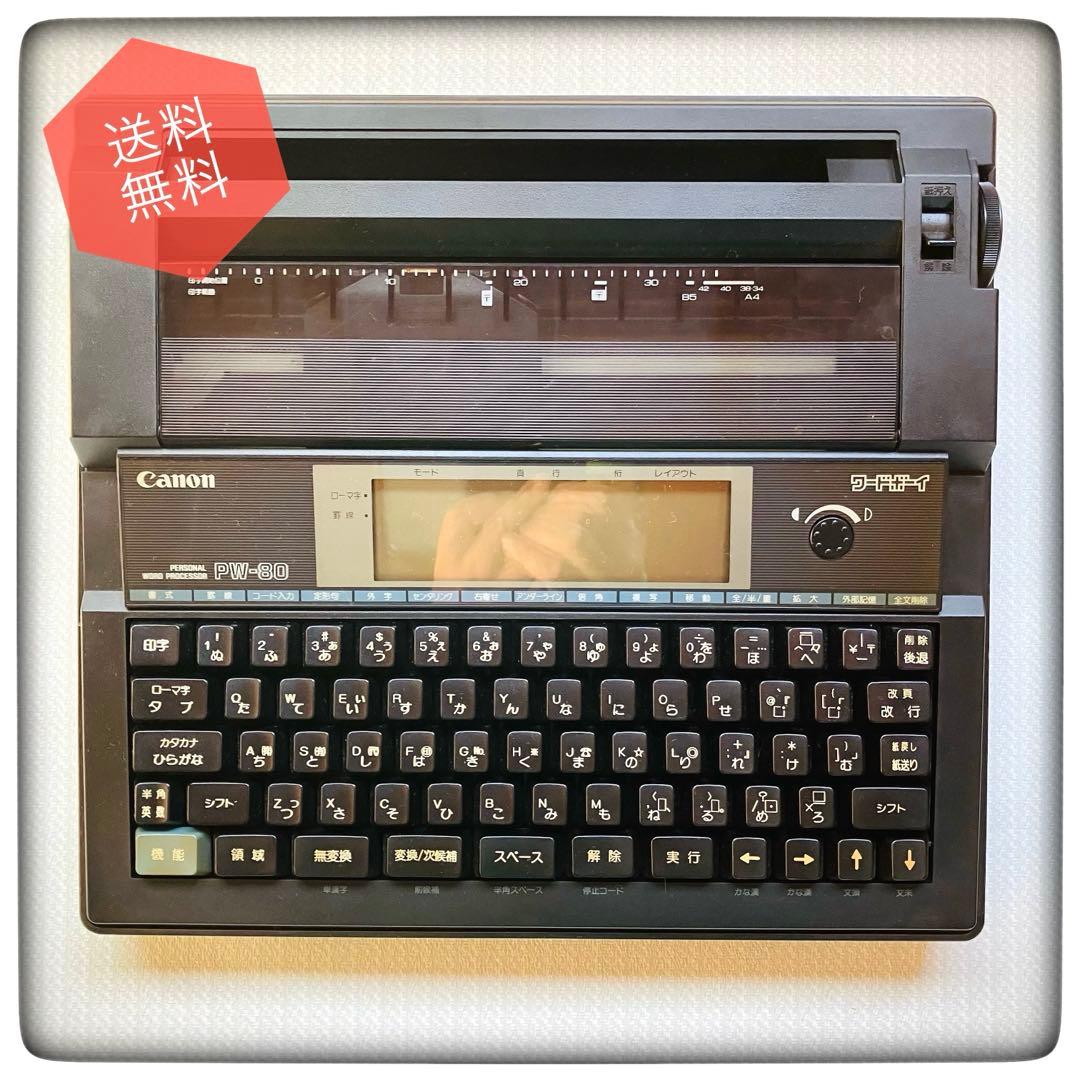
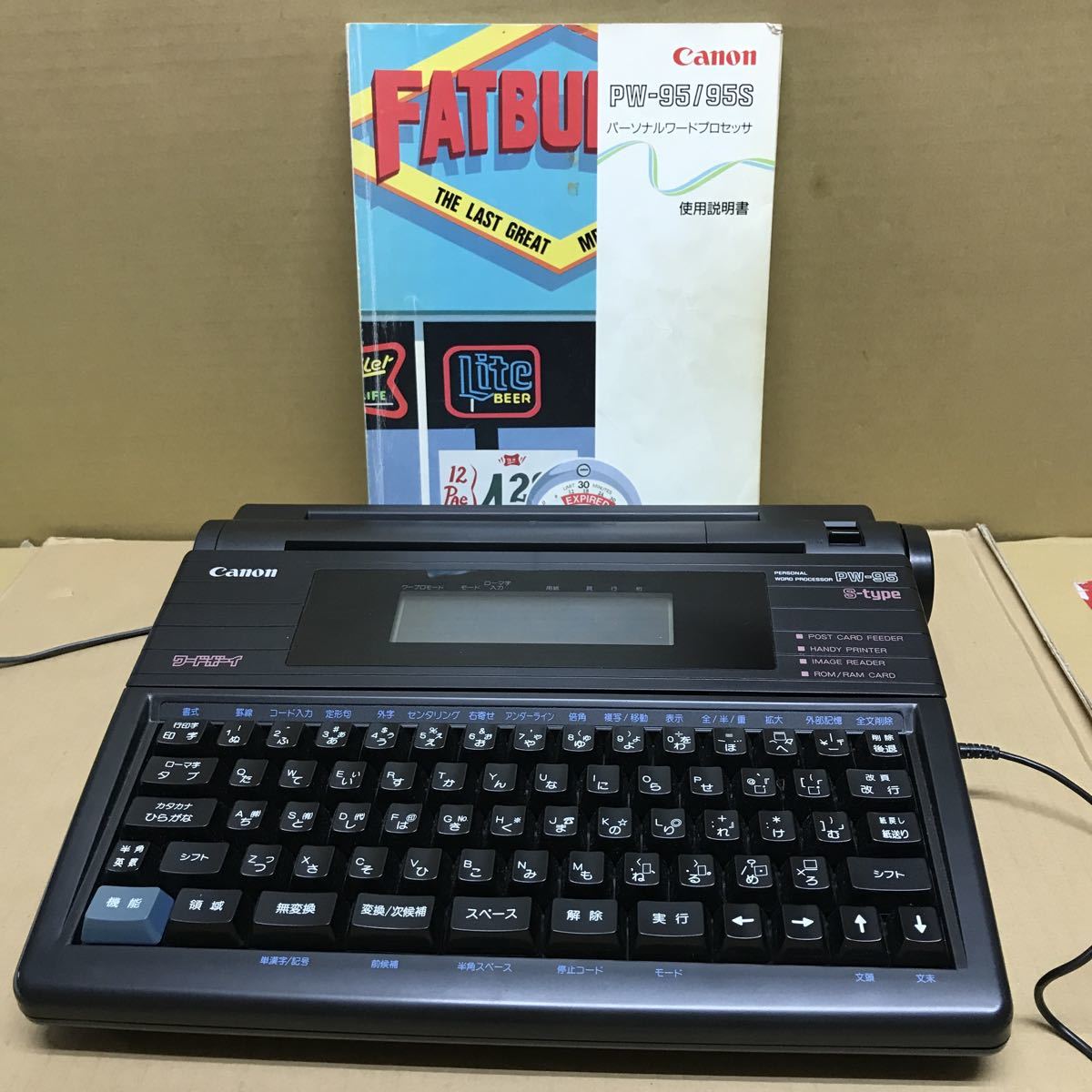
There were perhaps even more. Each search literally finds only one or two results, so it’s possible some other models are temporarily or permanently off the grid.
But that’s at least twelve PW word processors by my count. I can put my troika in a little stack. If I had all of the members of the PW family, the stack would start looking like a space elevator.
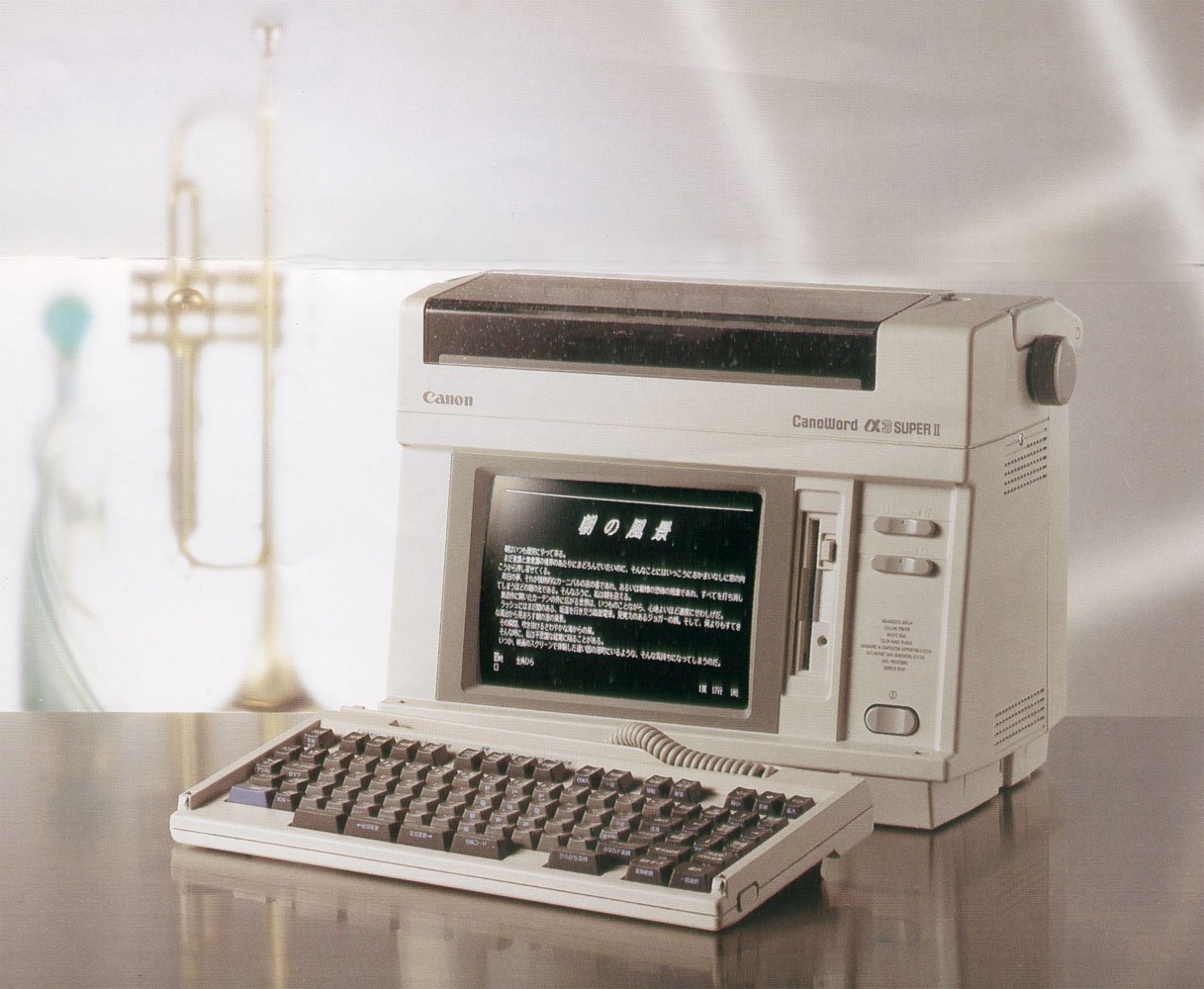
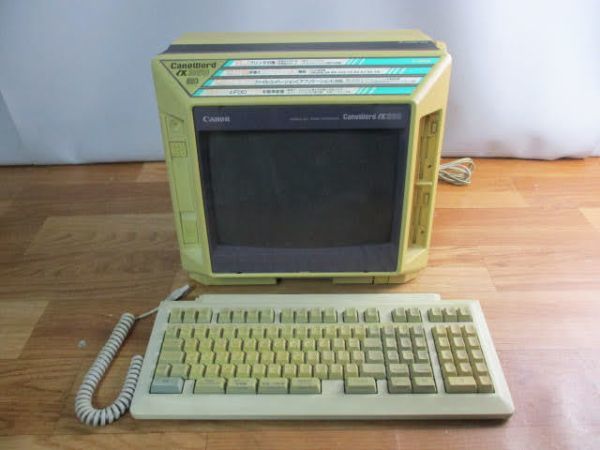
And there were more families in the Canon lineup: CanoWords, some beautiful, some less so…
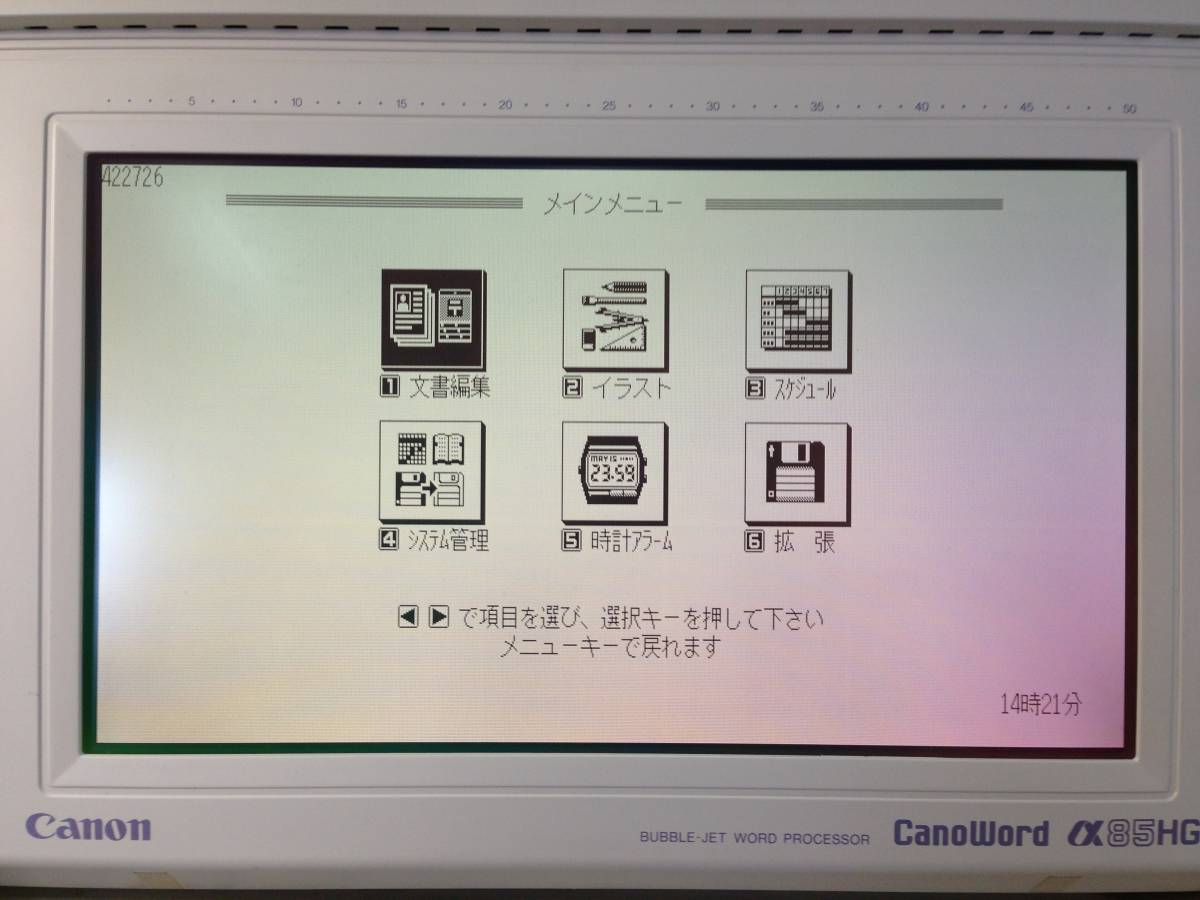
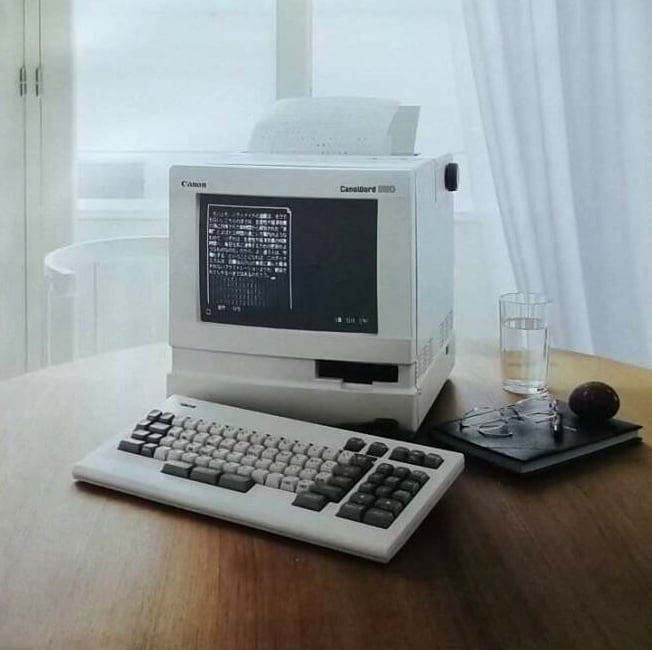
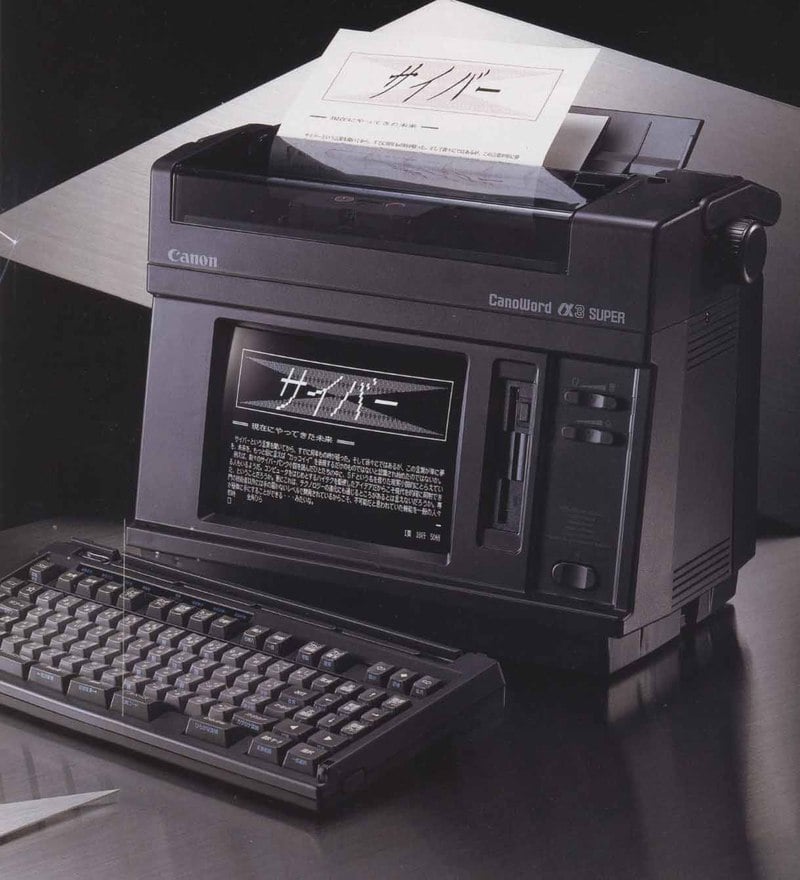
…and the J line with a cute-looking GUI…
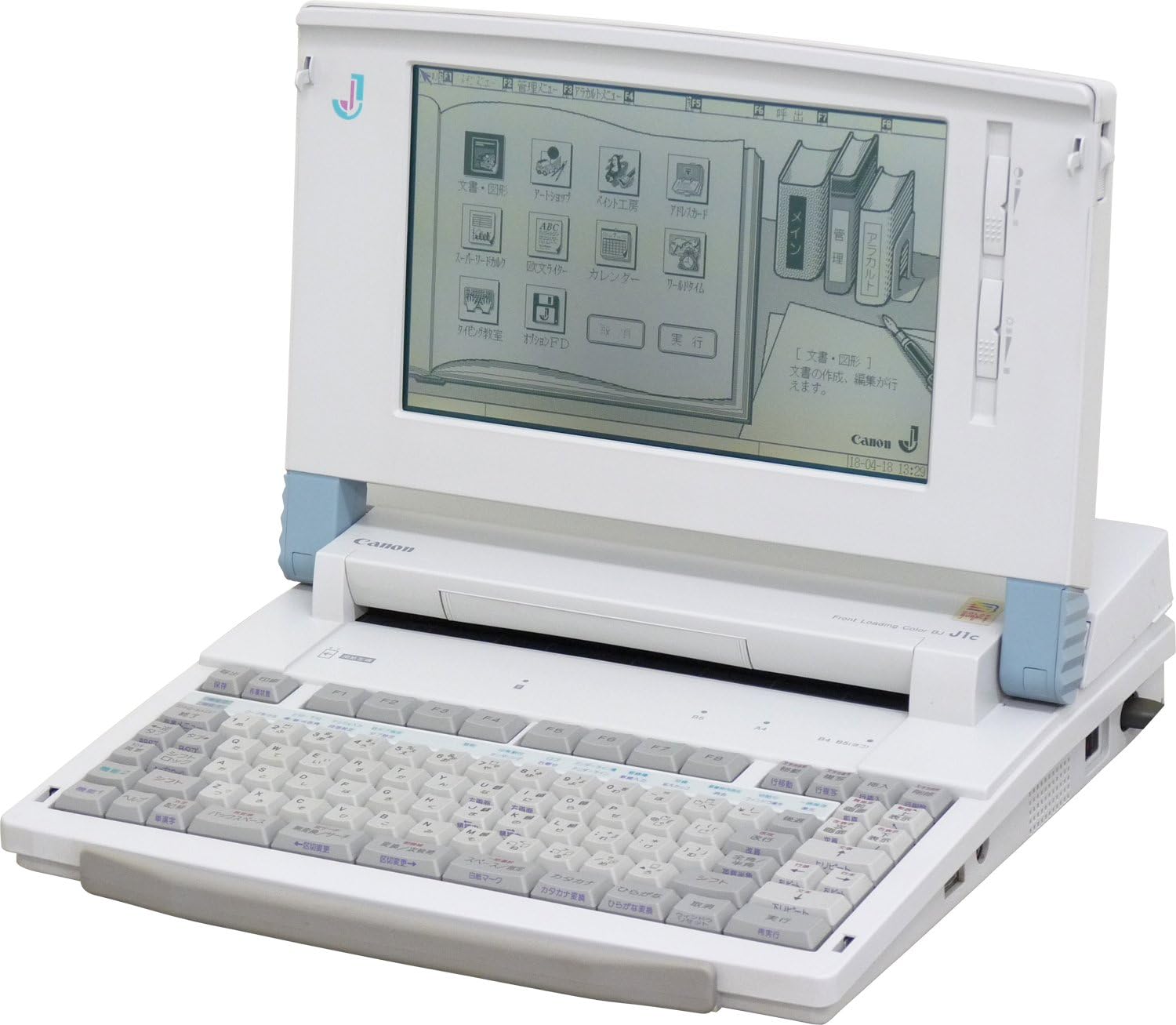
…and presumably a lot, lot more.
⌘
I have so many questions about this fascinating time. Was the 5×6×2 typing system actually similar to the alphabetic order in nature,† some sort of a misguided Japanese stepping stone toward QWERTY, which PW-60 and later models used instead? When were these machines made and whom for? Was there one team working on them, or competing teams? I see PW auctions often translated to English as “Word Boy” – is that kind of like “Walkman”? Why does 15 come after 10? And lastly, what’s up with the sad face key on the PW-70?
† Added after publishing: What I termed “5×6×2” is called fifty sounds (五十音) and indeed roughly equivalent to an alphabetic ordering, and used on more casual keyboards in Japan, in similar contexts alphabetic keyboards would be used in other countries. However, even here there’s more complexity: there are at least two ways this “alphabetic” ordering can be sorted.
The curiosity extends past Canon. If Canon made what seems like an entire store’s worth of machines, I bet its competitors did as well. This page at the IPSJ museum and its matching timeline hint at a fascinating era (and, curiously, Canon is barely on there). I vaguely get the importance of “Personal” in last issue’s PWP/Personal Word Processor – but I feel like there’s so much more to understand here.
Nanette Gottlieb’s book Word-Processing Technology in Japan: Kanji and the Keyboard is the closest to explaining it all, but I wish it was more nerdy. I want something like my chapter about the Typewriter Row, talking about the technical details of machines, stories of corporate intrigue, and other stuff like this.
Maybe one day I’ll get it. Maybe one day I will find that one true Japanese personal word processor aficionado. Let me know if you are one.
In the meantime, my three little Canon machines with their small but fascinating gradient of keyboards will be waiting.

Marcin
In a few days: Digging back into the other word processor by Canon you already know I love.
This was newsletter №47 for Shift Happens, a book about keyboards. Read more in the archives


